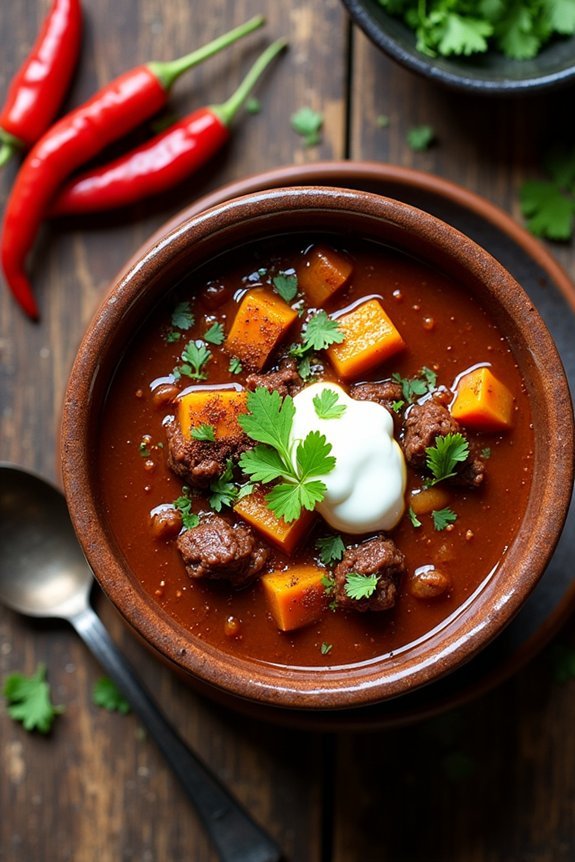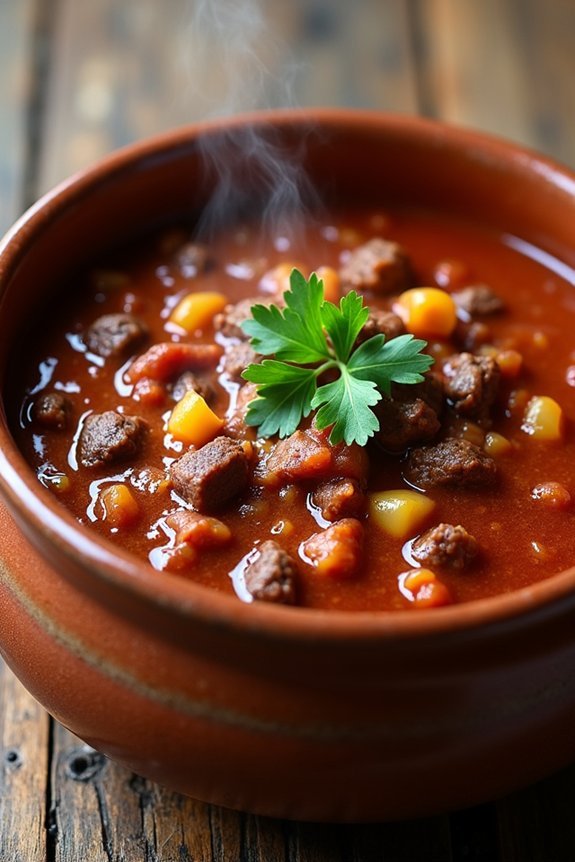

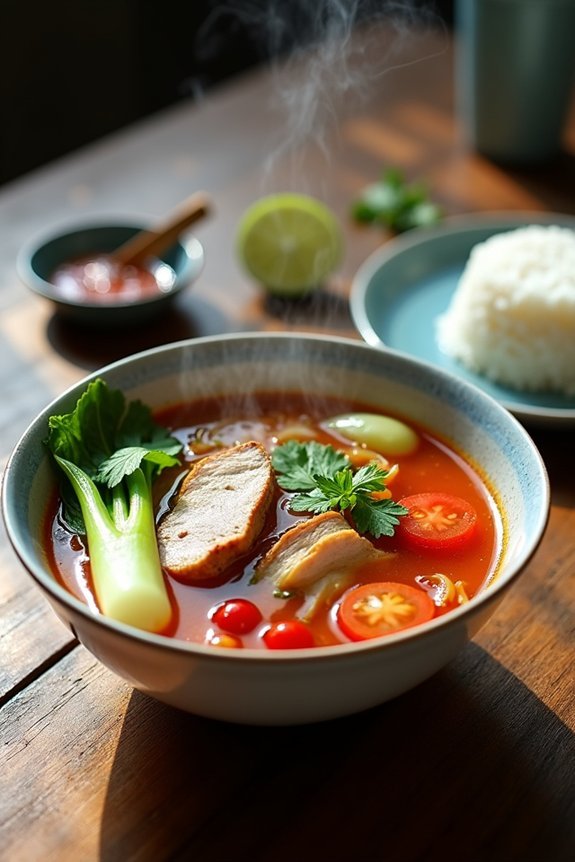
I’ve got something special to share today—Filipino Sinigang. This savory tamarind soup holds a special place in my heart, a perfect balance of tang and umami that’ll have you scraping the bowl clean. Ever had that moment when a spoonful of something warm just melts away your troubles? That’s Sinigang for you. Wondering what makes this soup so uniquely comforting? The secret lies in the harmonious marriage of sour tamarind and rich broth.
Why You’ll Love this Comforting Filipino Sinigang
Three reasons why you’ll love Filipino Sinigang – it’s sour, savory, and soul-warming all in one bowl. I’m obsessed with how the tangy tamarind broth balances perfectly with hearty meat and fresh vegetables. It’s truly the ultimate comfort food for rainy days or when you’re feeling under the weather.
What makes this dish special? The magical contrast between the rich meat (your choice of pork, beef, or seafood) and the bright, acidic soup. Plus, it’s surprisingly straightforward to prepare, especially with pre-packaged sinigang mix. Who needs takeout when homemade tastes this good?
What Ingredients are in Comforting Filipino Sinigang?
Sinigang, a beloved Filipino sour soup, brings together a harmonious blend of tangy, savory, and fresh elements. This comforting dish features tender meat (typically pork, beef, or seafood) swimming in a tamarind-based broth alongside crisp vegetables. The beauty of sinigang lies in its perfect balance of flavors—the sourness cutting through the richness of the meat, while vegetables add texture and freshness to every spoonful.
- 2 pounds meat (pork, beef, or seafood)
- 1 tablespoon cooking oil
- 2 garlic cloves, mashed
- 1 large onion
- 2 roma tomatoes (or one large tomato)
- 1 tablespoon patis (fish sauce)
- 9 cups water
- 1 packet (1.4 oz) sinigang soup mix (large packet)
- 5 small bok choy or 2 cups baby spinach
- Steamed rice, for serving
- Extra patis, for serving
When shopping for sinigang ingredients, you might notice some flexibility in the recipe. The meat can be swapped based on preference—pork belly or ribs are traditional favorites, but shrimp, fish, or even beef can work beautifully. The vegetables, too, can be adjusted: while bok choy or spinach provides the green element, many Filipino families add other vegetables like radish, eggplant, or string beans to their sinigang. The sinigang mix packet is a convenient modern option, though traditional recipes might use fresh tamarind or other souring agents like calamansi or green mango. Whatever variations you choose, the soul of this dish remains the same—a wonderfully tangy, comforting soup that tastes like home.
How to Make this Comforting Filipino Sinigang
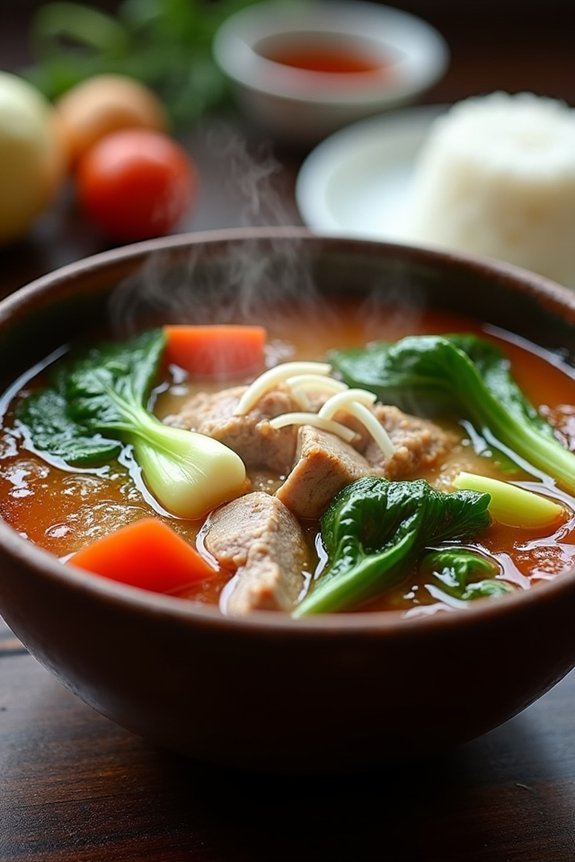
Making sinigang is surprisingly straightforward, and the payoff is a bowl of pure comfort that’ll warm you from the inside out. Start by heating 1 tablespoon of oil in a large pot, then add 2 mashed garlic cloves and 1 large onion. Let them gently brown, releasing their aromatics—this simple step builds the foundation of flavor for your soup. Next, toss in 2 roma tomatoes and cook until they begin to soften, then stir in 1 tablespoon of patis (fish sauce), which adds that distinctive umami depth that’s quintessentially Filipino.
Now for the star of the show—add your 2 pounds of chosen meat and brown it slightly. This creates a richer flavor profile before you pour in 9 cups of water. Bring everything to a rolling boil, then reduce to medium-low heat. If you’re making a seafood version, you’d add your prawns or fish now and cook for just 20 minutes, but for meat like pork or beef, you’ll want to simmer for about 40 minutes until it becomes tender enough to yield to your spoon. The meat slowly infuses the broth with its essence, creating that homey, satisfying quality that makes sinigang so beloved.
Once your meat is tender, stir in the 1.4 oz packet of sinigang mix—this magical powder instantly transforms your broth into the signature tangy soup. In the final moments, add 5 small bok choy or 2 cups of baby spinach and simmer just until wilted, about 5 minutes. You don’t want to overcook these greens; they should retain some texture and vibrant color. Ladle your steaming sinigang into bowls alongside a mound of freshly steamed rice. The rice isn’t just a side—it’s essential for soaking up that flavorful broth. Offer additional patis at the table for those who want to dial up the saltiness. One spoonful of this tangy, savory soup, and you’ll understand why it’s a fixture on Filipino family tables through generations.
Comforting Filipino Sinigang Substitutions and Variations
While traditional sinigang recipes have specific ingredients, you’ll find that this Filipino favorite welcomes adaptations based on what’s available in your kitchen. The protein is completely flexible—swap pork for chicken, beef, or shrimp depending on your mood. Vegetarians can use tofu and extra vegetables instead.
Don’t have tamarind soup mix? You can use fresh tamarind pods soaked in water, or even lemon juice in a pinch. The vegetables are negotiable too. No bok choy? Try spinach, kale, or mustard greens. Can’t find roma tomatoes? Any ripe tomato will work just fine.
What to Serve with Comforting Filipino Sinigang
No Filipino meal feels complete without thoughtfully chosen accompaniments for your steaming bowl of sinigang. Steamed white rice is non-negotiable—it soaks up that tangy tamarind broth like nothing else. Trust me, you’ll want plenty.
For authentic Filipino table settings, include small dishes of patis (fish sauce) for extra saltiness, fresh sliced chili peppers for heat lovers, and calamansi halves for squeezing over individual servings.
A simple side of blanched vegetables like string beans or eggplant offers textural contrast, while fried fish makes this a true feast. Perfect for rainy days, isn’t it? The combination just warms you from inside out.
Final Thoughts
After preparing and sharing this sinigang recipe with you, I’m convinced that this tangy Filipino soup deserves a permanent spot in your regular meal rotation. The perfect balance of sour tamarind, savory meat, and fresh vegetables creates comfort in a bowl that’s hard to resist, especially on chilly evenings or when you’re feeling under the weather.
What makes sinigang truly special is its adaptability. Can’t find bok choy? Spinach works beautifully. Prefer seafood to meat? Just adjust your cooking time. The soul of this dish remains intact regardless of these small tweaks. Isn’t that the mark of a truly timeless recipe?