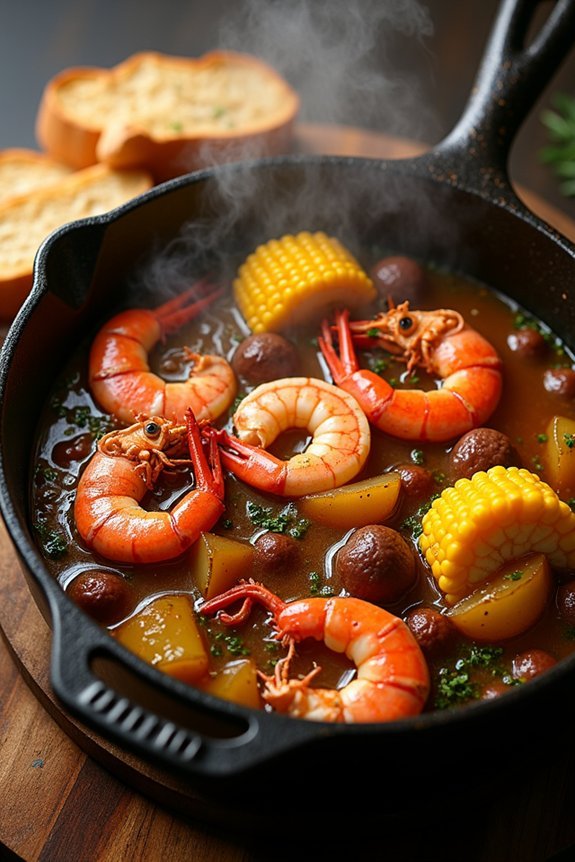

I’m absolutely enamored with coastal Spanish seafood paella, and I think you will be too. There’s something magical about the way those toasted fideos soak up rich lobster stock while seafood releases its briny essence. The colorful medley of bell peppers and sweet peas against plump mussels and tender calamari creates a feast for both eyes and palate. Want to know my secret for achieving that coveted socarrat—the crispy bottom layer that Spaniards fight over?
Why You’ll Love this Authentic Seafood Paella
Anyone who’s ever savored authentic Spanish cuisine knows there’s something magical about seafood paella. This coastal masterpiece brings together the ocean’s finest treasures—mussels, clams, calamari, and lobster—in one spectacular dish that’s bound to impress.
You’ll fall in love with how the toasted fideos (thin noodles) absorb the rich lobster stock, creating layers of flavor that simply can’t be matched. The colorful bell peppers and vibrant peas add brightness to each bite.
What makes this recipe truly special? It’s the perfect party centerpiece where everyone gathers around as the seafood opens, releasing its briny essence into the dish.
What Ingredients are in Authentic Seafood Paella?
Traditional Spanish seafood paella is a showstopper dish that combines the bounty of the sea with toasted noodles in a flavorful broth. The beauty of this coastal recipe is how it brings together various seafood elements—from delicate shellfish to tender calamari—creating layers of oceanic flavors in every bite. You’ll need quite a shopping list for this magnificent dish, but trust me, the end result is worth every ingredient.
- 2 (10 ounce) packages fideos (rolled vermicelli noodles)
- 1/4 cup olive oil (for toasting noodles) plus 1/4 cup (for cooking)
- 1 1/2 pounds New Zealand mussels (green-tipped)
- 1 1/2 pounds black mussels
- 1 1/2 pounds Manila clams
- 3/4 pound calamari
- 1/2 pound rock shrimp
- 2 lobsters
- 1 onion, coarsely diced
- 3 garlic cloves, minced
- 1 red bell pepper, cut into 1/2-inch dice
- 1 green bell pepper, cut into 1/2-inch dice
- 1 yellow bell pepper, cut into 1/2-inch dice
- 1 dried ancho chile
- 8-9 cups lobster stock
- 3/4 pound English petit peas (fresh or frozen)
- 1 lemon, cut into wedges
- 1 bunch chives
- 2 teaspoons hot sauce
When shopping for these ingredients, freshness is absolutely key, especially for the seafood components. Look for tightly closed shellfish that smell like the ocean, not fishy. The fideos noodles might be found in specialty or international markets, but thin spaghetti broken into small pieces can work in a pinch. The lobster stock provides the foundation of flavor, so if you can’t make your own, try to find a high-quality seafood stock as a substitute. And those colorful bell peppers? They’re not just for visual appeal—they add a sweet counterpoint to the briny seafood that makes this dish sing.
How to Make this Authentic Seafood Paella
Making seafood paella starts with properly preparing the noodles. Rather than using traditional rice, this coastal version uses fideos—thin vermicelli noodles broken into approximately 1/2-inch pieces. Spread these 2 (10-ounce) packages of fideos on a large baking sheet and drizzle with 1/4 cup olive oil, tossing until every noodle is lightly coated. Pop them into a 350-degree oven for 8-10 minutes, stirring occasionally until they reach a gorgeous medium brown color. This toasting step might seem fussy, but it’s absolutely essential—it develops a nutty flavor that forms the backbone of the entire dish.
While the noodles toast, prep your stunning seafood array. Give the 1 1/2 pounds of New Zealand mussels and 1 1/2 pounds of black mussels a good scrub under cold water, removing any clingy beards. Do the same with the 1 1/2 pounds of Manila clams. Clean 3/4 pound of calamari by removing the cartilage and cutting the body into half-inch strips (don’t they look like little rings of deliciousness?). Rinse your 2 lobsters, remove the claws and knuckles, and cut the tails into medallions. The seafood prep might leave your kitchen looking like a fish market exploded, but the flavor payoff is worth the mess. Now, heat 1/4 cup olive oil in a large paella pan over medium-high heat, add your coarsely diced onion and sauté for 3-5 minutes before adding the diced bell peppers and whole ancho chile. Once they’ve softened, add those toasted noodles and 3 cups of hot lobster stock, stirring constantly as the noodles absorb the flavorful liquid.
From here, it’s a choreographed dance of adding seafood in stages. First, nestle the New Zealand mussels and lobster claws under the noodles with another 3 cups of stock. After about 5-8 minutes, add the smaller mussels and clams. When shells start opening (about 10 minutes later), add the 1/2 pound of rock shrimp, calamari, lobster tail meat, and 3/4 pound of petit peas with another cup or two of stock. The whole cooking process takes about 35 minutes, during which you’ll be stirring, adding stock as needed, and watching the paella transform into a spectacular one-pan feast. Remember to discard any stubborn shellfish that refuse to open, then finish with lemon wedges and a generous sprinkle of fresh chives. The result? A showstopping seafood masterpiece that captures the essence of coastal Spain right in your kitchen.
Authentic Seafood Paella Substitutions and Variations
While the classic seafood paella recipe I’ve shared is divine, you don’t need to stress if you can’t find every ingredient on the list.
You can swap fideos for broken angel hair pasta, or substitute various seafood options based on availability. No rock shrimp? Regular shrimp work perfectly. Can’t find manila clams? Any small clams will do. The same goes for mussels—one variety works if you can’t source both types.
For a more budget-friendly version, skip the lobster and add extra shrimp or even chunks of firm white fish. The spirit of paella lies in its adaptability.
What to Serve with Authentic Seafood Paella
A perfectly prepared paella stands proudly as the centerpiece of any Spanish feast, but what you serve alongside it can elevate your dining experience from merely delicious to absolutely memorable.
I’m a firm believer in simple, complementary sides that don’t compete with paella’s complex flavors. A crisp green salad with sherry vinaigrette offers a rejuvenating contrast to the rich seafood. Crusty bread is non-negotiable – you’ll want it for soaking up that precious saffron-infused broth. Consider serving chilled gazpacho as a starter, or perhaps some marinated olives and Manchego cheese to nibble on while the paella works its magic.
Final Thoughts
After spending time with this coastal Spanish seafood paella recipe, I’ve come to appreciate how this iconic dish brings together the bounty of the sea in one magnificent pan. The combination of toasted fideos, succulent shellfish, and vibrant vegetables creates a feast for both the eyes and palate.
What I love most about paella is its ability to bring people together. There’s something magical about serving a steaming pan directly to your table, watching guests partake with excitement. The communal nature of sharing, the distinctive aroma of saffron and seafood, the satisfying texture of perfectly cooked noodles—pure culinary poetry.