

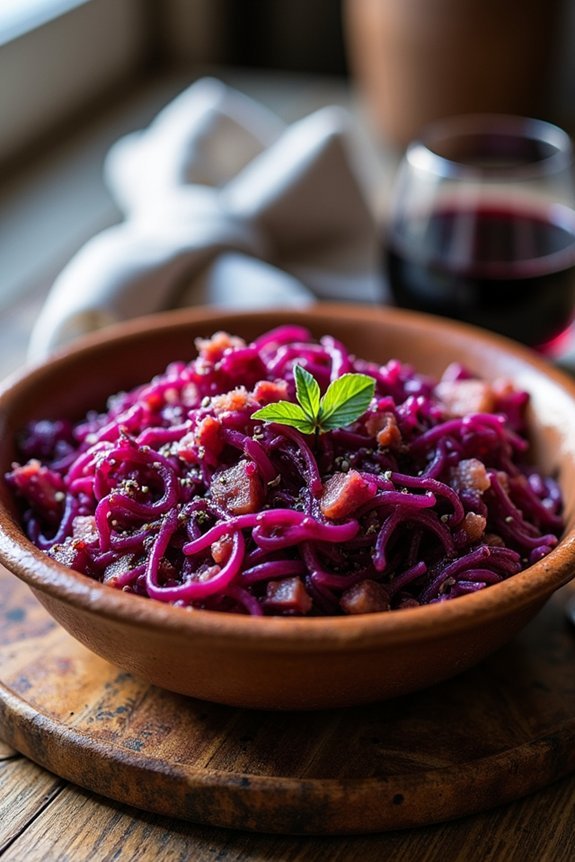
Have you ever tasted a dish that perfectly balances sweet and tangy flavors in every bite? That’s what you’ll get with German Rotkohl, a wine-braised red cabbage that transforms humble ingredients into something magical. I’m sharing my favorite version that pairs beautifully with everything from schnitzel to holiday roasts. The deep purple color alone makes it worthy of your table, but wait until you discover what happens when red wine meets red cabbage…
Why You’ll Love this Sweet-Tangy Red Cabbage
If you’re searching for a side dish that perfectly balances sweet and tangy flavors, this traditional German Rotkohl will become your new favorite. The combination of bacon, apples, and red wine creates a symphony of flavors that elevate humble cabbage into something extraordinary.
I love how the cabbage softens just enough while maintaining a slight bite. The magic happens when the vinegar and sugar meld with the beef stock, creating that signature sweet-sour profile. And the color? Absolutely stunning on any plate.
Can’t you just imagine this alongside a hearty schnitzel or roast? Trust me, even cabbage skeptics will ask for seconds.
What Ingredients are in Sweet-Tangy Red Cabbage?
Traditional German rotkohl is all about balancing sweet and tangy flavors to create a side dish that brings warmth and comfort to any meal. The ingredients in this hearty German red cabbage dish create a perfect harmony—from the smoky bacon that provides a savory base, to the tartness of green apples and vinegar, all complemented by the deep flavor of red wine. When these ingredients simmer together with the vibrant red cabbage, they transform into something truly special, a dish that has been passed down through generations of German home cooking.
- 2 slices bacon, diced
- 2 cups green apples, peeled and diced
- 4 cups red cabbage, rinsed, cored and shredded
- 2 tablespoons vinegar
- 1/4 cup beef stock
- 1/2 cup dry red wine
- 1 tablespoon sugar
- Salt and pepper to taste
When shopping for these ingredients, quality really matters. Look for firm, heavy red cabbage with bright, crisp leaves—this indicates freshness and will give you the best flavor and texture. For the apples, I recommend using Granny Smith for their tartness, which balances beautifully with the sweetness of the sugar. The dry red wine doesn’t need to be expensive, but choose something you’d enjoy drinking since the flavor will concentrate as it cooks. And while it might be tempting to skip the bacon for a vegetarian version, those rich, savory notes really do bring everything together. That said, you can substitute vegetable stock for the beef stock if you prefer to make the dish less meaty.
How to Make this Sweet-Tangy Red Cabbage
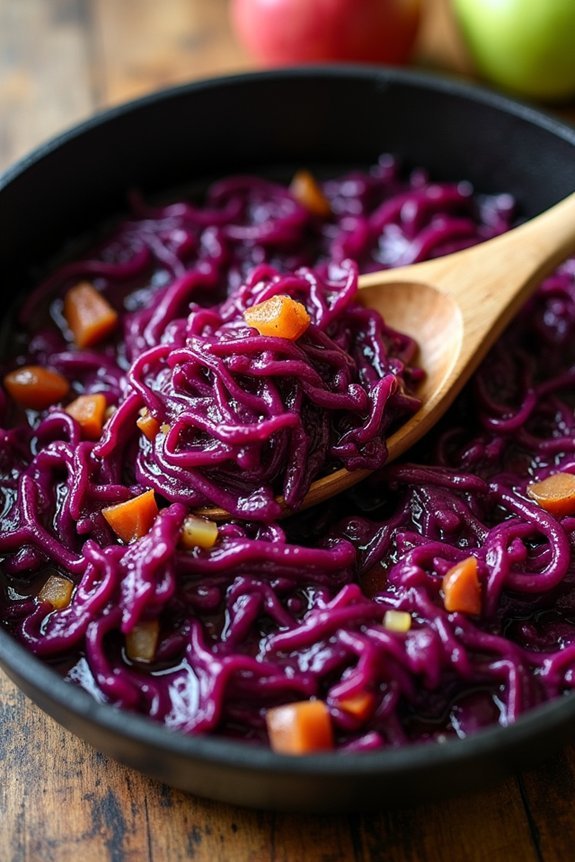
Making rotkohl is surprisingly simple, though the flavors taste like you’ve been cooking all day. Start by heating a large skillet over medium heat and adding those 2 slices of diced bacon. Let them sizzle away until they’ve softened but aren’t quite crispy yet—this usually takes about 3-4 minutes. The bacon provides a beautiful savory foundation that will infuse the entire dish, and that little bit of rendered fat is liquid gold for flavor.
Once your bacon has softened, it’s time to add the remaining ingredients all at once: 2 cups of peeled and diced green apples, 4 cups of shredded red cabbage, 2 tablespoons of vinegar, 1/4 cup of beef stock, 1/2 cup of dry red wine, and 1 tablespoon of sugar. Give everything a good stir to combine, then bring the mixture to a boil. This initial high heat helps to jump-start the cooking process and begins to break down the cabbage fibers. When you see those bubbles forming, reduce the heat to a simmer, cover the skillet with a tight-fitting lid, and let everything cook together for about 15 minutes. The cabbage should become tender but still have a slight bite to it—nobody wants mushy rotkohl, right? During this simmering time, all those sweet, tangy, and savory flavors mingle and develop into that classic German taste profile.
Before serving, don’t forget the final vital step: seasoning with salt and pepper to taste. This might seem minor, but it’s actually what brings all the flavors into perfect balance. I like to start with about 1/2 teaspoon of salt and a few grinds of black pepper, then taste and adjust from there. Sometimes I find the cabbage needs a touch more sweetness or acidity at this point too, so don’t be afraid to add a sprinkle more sugar or a splash of vinegar if needed. The cabbage will continue to develop flavor as it sits, making it one of those magical dishes that’s almost better the next day—if you can wait that long!
Sweet-Tangy Red Cabbage Substitutions and Variations
While this classic rotkohl recipe shines on its own, you’ll be glad to know it welcomes all sorts of creative adaptations to suit your pantry and preferences.
No bacon? Try a tablespoon of butter or olive oil instead. Vegetarians can skip the beef stock for vegetable broth—still delicious, I promise. Don’t have red wine? Apple juice works wonderfully, especially for alcohol-free kitchens.
Some cooks add a pinch of cloves or juniper berries for warmth, while others toss in cranberries or raisins for extra sweetness. I’m particularly fond of adding a tablespoon of lingonberry jam for a Swedish twist. Isn’t cooking just a delightful adventure?
What to Serve with Sweet-Tangy Red Cabbage
When paired with the right companions, this vibrant rotkohl transforms from a humble side dish into the cornerstone of a memorable German feast. I’m always drawn to serving it alongside hearty mains like bratwurst, schnitzel, or a succulent roast pork with crispy crackling. The tangy-sweet notes cut through rich meats beautifully.
For a complete German spread, add potato dumplings or spätzle to soak up that gorgeous purple-red sauce. Can you imagine a more comforting winter plate?
Want to keep it simple? A crusty rye bread and good butter is all you really need. Truly, German comfort food at its finest.
Final Thoughts
As I’ve shared this treasured rotkohl recipe with you, I hope you’ll discover why this vibrant German side dish deserves a permanent spot in your cooking repertoire. The perfect balance of sweet apples, tangy vinegar, and rich red wine transforms humble cabbage into something truly special.
Isn’t it amazing how such simple ingredients create such complex flavors? That’s the magic of traditional German cooking—practical, yet deeply satisfying. The bacon adds just the right savory note, while the slow simmering melds everything into silky perfection.