
Let me tell you about pho bac, the northern Vietnamese soup that’ll transform your kitchen into a culinary paradise. Have you ever wondered what makes a broth so deeply complex that it feels like a warm hug from a Vietnamese grandmother? This recipe isn’t just food—it’s a journey through generations of flavor, where each spoonful tells a story of tradition, technique, and pure comfort. Curious how we’ll reveal these secrets.
Why You’ll Love this Authentic Pho Bac
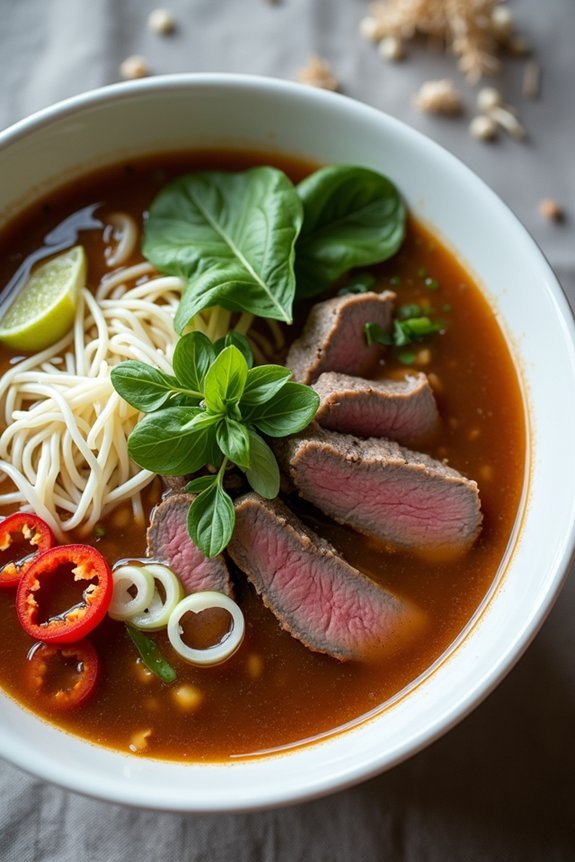
A steaming bowl of Pho Bac isn’t just soup—it’s a culinary journey through Northern Vietnam’s rich gastronomic landscape. This hearty broth transforms humble ingredients into a symphony of flavor that’ll make your taste buds dance. Want depth? We’re talking sixteen hours of slow-simmering bones, toasted spices, and magical aromatics that create liquid gold. The delicate rice noodles, tender beef slices, and complex broth represent generations of cooking wisdom. Each spoonful tells a story of tradition, technique, and pure comfort—a dish that’s simultaneously sophisticated and soul-warming.
What Ingredients are in Authentic Pho Bac?
Pho Bac is a traditional Northern Vietnamese soup that’s packed with incredible depth of flavor, requiring a careful selection of ingredients that create its signature rich and aromatic broth. The recipe demands high-quality, authentic components that transform a simple soup into a culinary masterpiece.
Ingredients:
- 4 large shallots (unpeeled)
- 1 piece of ginger (4 inches, unpeeled)
- 1 teaspoon fennel seeds
- 5 star anise
- 1 cinnamon stick (3 inches)
- 1 black cardamom pod (crushed)
- 5 lbs beef leg bones (grass-fed preferred)
- 1 1/2 lbs boneless beef chuck
- 6 quarts cold water
- 1/2 ounce dried scallops
- 2 tablespoons kosher salt
- 1/4 cup fish sauce
- 8 scallions
- 1 1/2 tablespoons unseasoned rice vinegar
- 2 serrano chilies
- 2 lbs small flat rice noodles
- 8 ounces beef sirloin
- 1 medium yellow onion
- 1/3 cup fresh cilantro leaves
- Fresh ground black pepper
When sourcing ingredients for Pho Bac, remember that authenticity matters. Seek out Asian markets or specialty grocery stores for hard-to-find spices like black cardamom and dried scallops. The quality of your bones and beef will dramatically impact the final flavor, so don’t skimp on these core ingredients – they’re the heart and soul of this legendary Vietnamese soup.
How to Make this Authentic Pho Bac
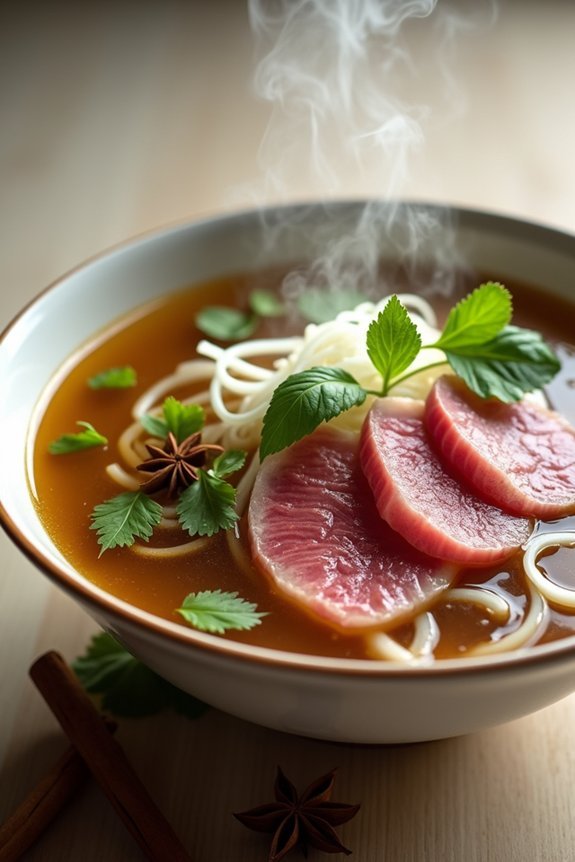
Making authentic Pho Bac is a labor of love that requires patience and attention to detail. Start by preparing the aromatics: take 4 large shallots and 1 piece of 4-inch ginger (both unpeeled) and broil them on a foil-lined baking sheet. You’ll want to turn them occasionally, letting them blacken beautifully for about 15-20 minutes. Once they’re charred and cooled, peel off the skins and flatten the ginger with the side of a knife – this releases those incredible flavor compounds.
Next, toast your spices – 1 teaspoon fennel seeds, 5 star anise, 1 cinnamon stick, and 1 crushed black cardamom pod – in a small skillet over medium heat. Swirl them around for about 3 minutes until they become fragrant and release their essential oils. For the broth, you’ll need 5 pounds of beef leg bones (grass-fed if possible). Bring them to a boil in cold water, drain, and rinse to remove any impurities. Then return the bones to a clean pot with your roasted aromatics, 1 1/2 pounds of beef chuck, and 6 quarts of cold water.
The magic happens during the long, slow cooking process. Bring the pot to a boil, then reduce heat and simmer. Add your toasted spices, 1/2 ounce of dried scallops, and 2 tablespoons of kosher salt. Skim the surface occasionally to keep the broth clear. After about 1 1/2 hours, when the beef is tender, remove the meat and cool it in an ice bath. Continue simmering the broth for another 1 1/2 hours, then strain it through cheesecloth, discarding the solids. Finish by stirring in 1/4 cup of fish sauce and the white parts of 8 scallions. The result? A deeply complex, soul-warming soup that’s worth every minute of preparation.
Authentic Pho Bac Substitutions and Variations
Every culinary masterpiece has room for creativity, and this northern Vietnamese soup is no exception. Want to shake things up. Swap beef bones for chicken or pork, though traditionalists might raise an eyebrow. Short on time. Use store-bought broth as a base, but know you’ll sacrifice depth. No dried scallops. No problem – fish sauce can carry that umami punch. Missing star anise. Cinnamon and fennel can still sing. Vegetarian friends aren’t left out – tofu and mushrooms make killer protein swaps. The magic’s in layering flavors, not strict adherence.
What to Serve with Authentic Pho Bac
When you’ve mastered the art of crafting an authentic Pho Bac, your culinary adventure doesn’t stop at the broth. I recommend serving this hearty soup with classic Vietnamese accompaniments that elevate the dining experience. Fresh herbs like Thai basil, mint, and cilantro add vibrant flavor layers. Bean sprouts bring crisp texture, while lime wedges offer bright acidity. Sliced jalapeños can dial up the heat for spice lovers. Crispy bánh mì on the side provides a perfect crunchy contrast to the silky noodles. Don’t forget pickled vegetables for that tangy punch that cuts through the rich broth.
Final Thoughts
Pho Bac represents more than just a recipe—it’s a culinary journey that transforms humble ingredients into a symphonic bowl of comfort. This Northern Vietnamese treasure isn’t merely soup; it’s a reflection of patient cooking and deep cultural tradition. Every simmering hour develops layers of flavor that can’t be rushed. The careful toasting of spices, the precise slicing of beef, the delicate balance of broth—these aren’t just steps, they’re an art form. When you finally ladle that steaming, aromatic liquid over tender noodles, you’re not just serving a meal, you’re sharing a story of generations.