
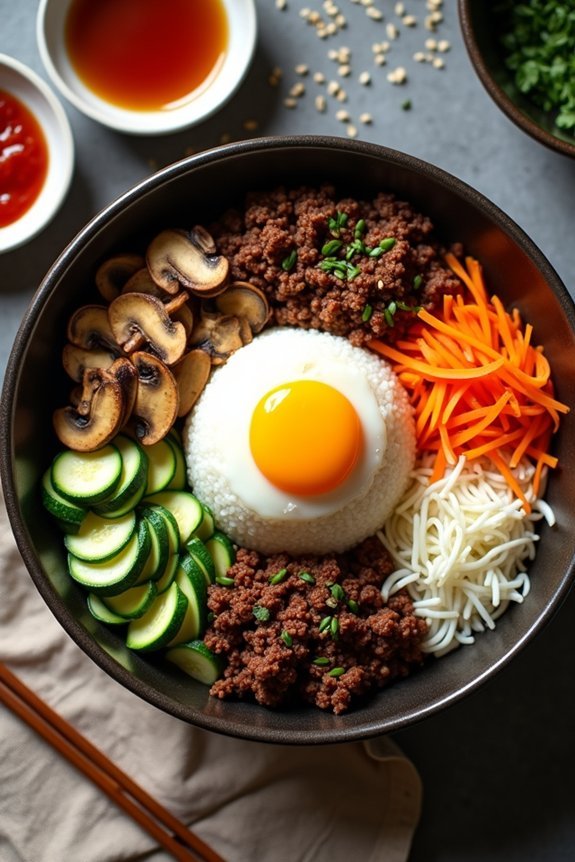
I’ve got a confession: Korean bibimbap has completely stolen my heart. There’s something magical about that sizzling stone bowl filled with perfectly arranged colorful veggies, savory beef, and that glorious runny egg on top. The way the rice gets crispy on the bottom while the gochujang sauce brings everything together? Pure culinary genius. Ever wondered how to recreate this restaurant favorite at home without a trip across the Pacific? Let’s break it down together.
Why You’ll Love this Authentic Korean Bibimbap
Versatility is what makes bibimbap one of Korea’s most beloved dishes—and why you’re about to fall in love with it too. This colorful rice bowl adapts to whatever ingredients you have on hand, making it perfect for using up leftovers in your fridge. I can’t get enough of how the runny egg yolk creates a silky sauce when mixed with the chili paste and vegetables. The contrasting textures—crisp vegetables, tender beef, and fluffy rice—create a symphony in each bite. Want it vegetarian? Skip the beef. Spice lover? Add more chili paste. It’s your bowl, your rules.
What Ingredients are in Authentic Korean Bibimbap?
Korean bibimbap is a beautiful, colorful dish that’s both nutritious and delicious. The name literally translates to “mixed rice,” which perfectly describes this bowl of warm rice topped with an array of vegetables, protein, and that signature fried egg with a runny yolk. What makes bibimbap so wonderful is how customizable it can be, while still maintaining its authentic Korean flavors through key ingredients like sesame oil, soy sauce, and gochujang (Korean chili paste).
- 1 cup short-grain rice
- 1/2 pound lean ground beef
- 2 eggs
- 1/2 zucchini, thinly sliced
- 1 cup mushrooms, thinly sliced
- 1/2 cup bean sprouts
- 1/2 cup carrots, julienned
- 2 tablespoons soy sauce
- 3 tablespoons sesame oil
- 2 teaspoons sugar
- 1 garlic clove, minced
- 1/2 teaspoon grated ginger
- 1/2 cup apple juice
- 1/4 cup Korean chili paste (gochujang)
- 2 tablespoons rice wine vinegar
When shopping for bibimbap ingredients, try to use short-grain rice rather than long-grain varieties, as it provides the sticky texture that’s essential for authentic Korean cuisine. The vegetables can certainly be swapped based on what’s seasonal or available in your area—spinach, radish, and cucumber are common alternatives. If you’re vegetarian, simply omit the beef and add more vegetables or substitute with tofu. And while the runny egg yolk is traditional, creating a creamy sauce when mixed through, you can cook it to your preference. Remember, the gochujang chili paste is what gives bibimbap its distinctive flavor, so try not to skip this ingredient if you want an authentic taste experience.
How to Make this Authentic Korean Bibimbap
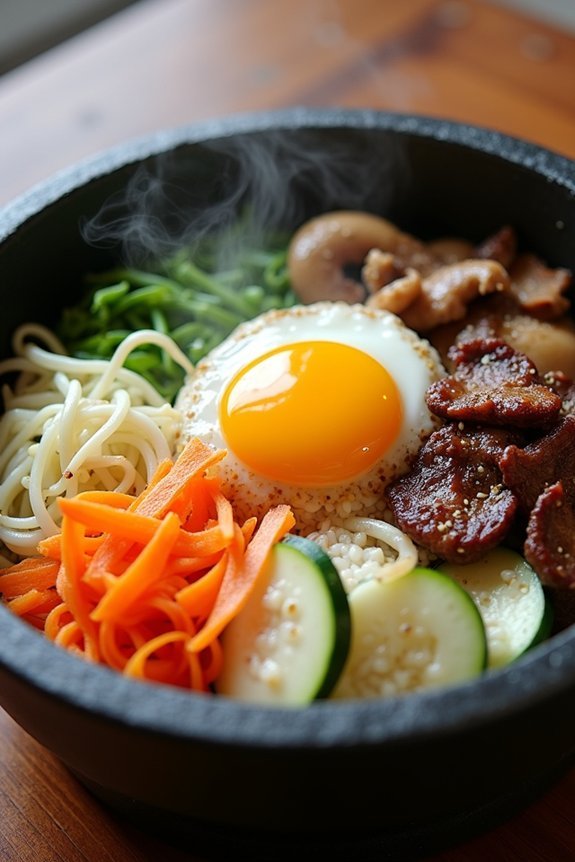
Making bibimbap at home might seem intimidating with all those colorful components, but the process is actually quite straightforward. Let’s start with the beef marinade, which gives this dish its savory foundation. In a bowl, combine 2 tablespoons of soy sauce, 1 tablespoon of sesame oil, 2 teaspoons of sugar, 1 minced garlic clove, 1/2 teaspoon of grated ginger, and 1/2 cup of apple juice. This slightly sweet and umami-rich mixture gets tossed with 1/2 pound of lean ground beef, which you’ll set aside to marinate while preparing the other components. The marinade really works its magic in just 15-20 minutes, but longer is certainly fine if you want to prep ahead.
Now for the colorful array of vegetables that make bibimbap such a visual treat. Cook 1 cup of short-grain rice according to package directions—this will form the base of your bowl. While the rice cooks, prepare each vegetable separately to maintain their distinct flavors and textures. Heat 1/2 tablespoon of sesame oil in a skillet and sauté 1/2 zucchini (thinly sliced) until tender, about 5 minutes, then transfer to a bowl. Repeat with 1 cup of thinly sliced mushrooms using another 1/2 tablespoon of oil. For the 1/2 cup of bean sprouts, a quick blanch in boiling water for just a minute will soften them while keeping their signature crunch. No need to cook the 1/2 cup of julienned carrots—their raw crispness adds wonderful texture. Cook the marinated beef in the same skillet until fully browned, and finally, fry 2 eggs in the remaining tablespoon of sesame oil, keeping those yolks gloriously runny.
Assembly is where the art happens. Divide the rice between two bowls, creating a mound in the center. Arrange the vegetables and beef in separate sections around the rice—like a colorful painter’s palette—and crown each bowl with a beautiful fried egg. The finishing touch? Serve with 1/4 cup of Korean chili paste (gochujang) and 2 tablespoons of rice wine vinegar on the side, allowing each person to add to taste. When you’re ready to dig in, break that golden yolk and stir everything together. The runny yolk combines with the chili paste to create a creamy, spicy sauce that coats every grain of rice and morsel of vegetable. Pure comfort in a bowl, with a kick that’ll wake up your taste buds.
Authentic Korean Bibimbap Substitutions and Variations
The beauty of bibimbap lies in its flexibility—you can adapt this colorful Korean classic to suit whatever ingredients you have on hand. Don’t have zucchini? Try cucumber or spinach instead. Short on beef? Tofu works beautifully for a vegetarian version, or swap in chicken or pork if that’s what’s in your fridge.
For a lower-carb option, cauliflower rice makes a convincing stand-in. Can’t find Korean chili paste? A mix of sriracha and miso paste delivers similar depth. The traditional runny egg can become fully cooked if you’re squeamish about yolks. Remember, authentic bibimbap is really about the balance of textures and flavors.
What to Serve with Authentic Korean Bibimbap
When pairing dishes with authentic Korean bibimbap, what could possibly complement this already complete meal? I’m thinking kimchi, of course—that tangy, spicy fermented cabbage adds the perfect counterpoint to bibimbap’s savory richness.
A light soup like miyeok guk (seaweed soup) or doenjang jjigae (soybean paste soup) makes for a wonderful starter. Can’t forget some crisp Korean pickles or kkakdugi (cubed radish kimchi) on the side.
For beverages, barley tea (boricha) or a cold light beer works beautifully to cleanse the palate between bites of this colorful rice bowl.
Final Thoughts
After spending time exploring the colorful world of bibimbap, I’m convinced this dish represents everything wonderful about Korean cuisine in a single bowl. The harmony of textures, flavors, and colors creates a truly satisfying meal that’s both nourishing and delightful.
What makes bibimbap so special is its versatility. You can customize it with whatever vegetables you have on hand, make it vegetarian, or add your protein of choice. That runny egg yolk, though? Non-negotiable. It brings everything together in the most magical way.
Ready to bring some Korean comfort to your table?