
I’ve always believed the best beef jerky comes from my own kitchen, not a gas station rack. When you make it yourself, you’re in complete control—from selecting that perfect cut of beef to crafting a marinade that hits all your favorite flavor notes. There’s something deeply satisfying about transforming simple ingredients into chewy, savory strips that pack a protein punch. Ready to discover why homemade jerky might just ruin store-bought versions for you forever?
Why You’ll Love this Homemade Beef Jerky
Everyone loves a good beef jerky, but the store-bought stuff often comes with questionable ingredients and a hefty price tag. That’s why I’m thrilled to share this homemade version that puts you in complete control. You’ll appreciate knowing exactly what goes into your jerky—quality beef with simple, wholesome marinade ingredients.
The flavor is miles better too—rich, savory notes from soy sauce and sherry, with hints of ginger and garlic that simply can’t be matched by commercial brands. Plus, you can adjust the spiciness to your liking. Ever had jerky that perfectly balances chewy and tender? That’s what you’ll create here.
What Ingredients are in Homemade Beef Jerky?
Making homemade beef jerky is surprisingly simple, and it requires just a handful of ingredients that you probably already have in your pantry. The marinade combines savory, sweet, and tangy elements that really transform the beef into something special. I’m always amazed at how these basic ingredients work together to create such a delicious snack that’s perfect for road trips, hiking adventures, or just satisfying those mid-afternoon cravings.
- 2 pounds beef (round, rump, sirloin tip, or London broil for best results)
- 1/3 cup dry sherry
- 1/2 cup soy sauce
- 1/3 cup chicken or beef stock
- 3 tablespoons rice wine vinegar
- 1 tablespoon brown sugar
- 1 teaspoon finely diced fresh ginger
- 2 chopped garlic cloves
- 1 teaspoon freshly ground black pepper
When selecting your beef, the quality really matters for jerky. London broil tends to give the best results because of its leanness and texture. You’ll want to remove all visible fat from the meat before slicing, as fat can make your jerky spoil faster. Also, don’t be afraid to adjust the marinade to suit your taste preferences—maybe you want it spicier with some red pepper flakes, or sweeter with a bit more brown sugar. The marinade is where you can get creative and make this recipe truly your own.
How to Make this Homemade Beef Jerky
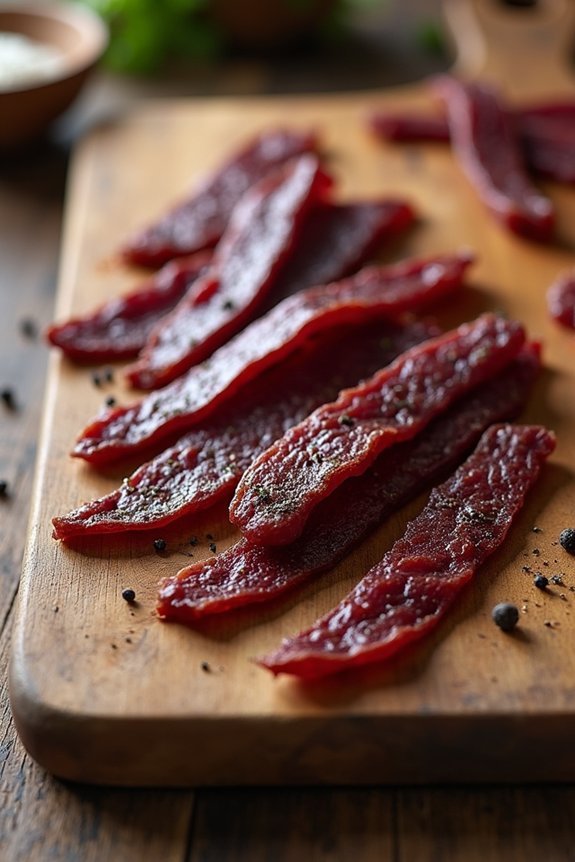
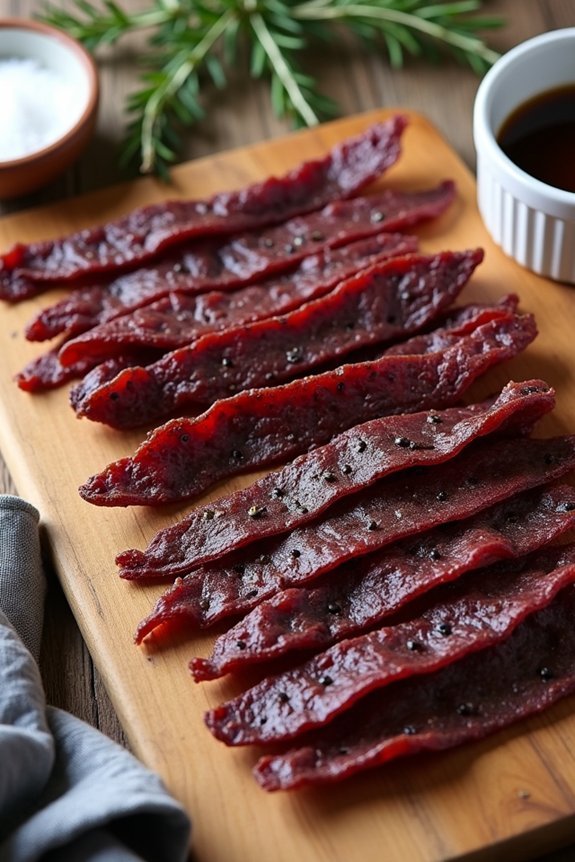
The key to perfect beef jerky starts with properly preparing your 2 pounds of beef. First, remove all visible fat from the meat (fat can lead to spoilage), then wrap it in plastic wrap and freeze it for about 2 hours until it’s almost solid. This freezing step is essential—it makes slicing the meat into those perfect, thin pieces so much easier. Once the meat is firm but not completely frozen, cut it with the grain into uniform 1/8-inch thick slices. Arrange these slices in a shallow dish where they’ll soak up all that flavorful marinade.
Next, combine your marinade ingredients: 1/3 cup dry sherry, 1/2 cup soy sauce, 1/3 cup chicken or beef stock, 3 tablespoons rice wine vinegar, 1 tablespoon brown sugar, 1 teaspoon finely diced ginger, 2 chopped garlic cloves, and 1 teaspoon freshly ground black pepper. Bring this mixture to a boil in a saucepan, then cool it completely before pouring it over your sliced meat. Let everything marinate overnight in the refrigerator, giving it a stir once or twice to guarantee every piece gets evenly flavored. The longer it marinates, the more intense the flavor will be, so don’t rush this step.
When you’re ready to dry the jerky, preheat your oven to 250°F and line the bottom with foil for easy cleanup. Pat each piece of meat dry with paper towels (this helps it dry more efficiently), then arrange the slices in a single layer on a roasting rack. Place the rack in the oven, and immediately reduce the heat to 150°F. Now comes the waiting game—allow the jerky to dry slowly for about 8 hours. The finished jerky should be stiff but still bendable, not brittle. Remember that jerky needs to be dried at 145°F or above to kill any microorganisms, so keep an eye on your oven temperature. Once it’s done, store your homemade beef jerky in an airtight container in the refrigerator, where it’ll keep for weeks—if you can resist eating it all right away, that is.
Homemade Beef Jerky Substitutions and Variations
While you’ve mastered the basic beef jerky recipe, let’s explore how you can customize it to suit your taste preferences or work with what’s already in your pantry.
Don’t have dry sherry? Red wine or apple cider vinegar work beautifully. For a spicier kick, try adding sriracha, crushed red pepper, or a dash of cayenne. Can’t do soy? Coconut aminos make a fantastic substitute. Want smokier flavor without a smoker? A teaspoon of liquid smoke does wonders. Craving something sweet-savory? Double the brown sugar or drizzle in some maple syrup. You might even experiment with herbs like rosemary or thyme for an earthy profile.
What to Serve with Homemade Beef Jerky
Beef jerky isn’t just a standalone snack—it deserves proper accompaniments to elevate your jerky experience. I find that sharp cheddar cheese creates a delicious contrast with the salty-sweet flavors of the marinade. For beverages, nothing beats a cold craft beer or bourbon neat to complement those smoky, umami notes.
Fresh fruits like apples or pears offer a revitalizing counterpoint to the jerky’s intensity. And don’t forget some crusty bread or crackers to round out an impromptu charcuterie board. The possibilities are endless, really. What’s your favorite jerky pairing?
Final Thoughts
Making your own beef jerky at home transforms ordinary cuts of meat into extraordinary snacks that’ll wow friends and family alike. Trust me, there’s something incredibly satisfying about creating this protein-packed treat with your own two hands.
The process might seem time-consuming, but isn’t that marinating and slow drying what develops those complex flavors we crave? Store your finished jerky in airtight containers, and it’ll stay fresh for weeks—though I doubt it’ll last that long.