I’ve been dreaming about those perfect yakitori skewers from my favorite izakaya—that magical balance of sweet and savory, the glossy caramelized exterior, and that irresistible charred aroma. There’s something deeply satisfying about food on sticks, isn’t there? The good news is you don’t need a ticket to Tokyo to experience authentic yakitori. With just a handful of ingredients and some simple techniques, you can recreate these addictive Japanese chicken skewers right in your own backyard. Ready to reveal the secrets?
Why You’ll Love this Authentic Japanese Yakitori
Every bite of these authentic Japanese yakitori chicken skewers delivers a perfect balance of sweet, savory, and umami flavors that’ll transport you straight to a bustling Tokyo alleyway. The magical combination of mirin, soy sauce, and sugar creates that irresistible glaze that caramelizes beautifully on the grill. What makes these skewers so special? They’re incredibly juicy from using thigh meat with the skin on—traditional and utterly delicious. Plus, they’re surprisingly simple to make at home. The alternating chunks of tender chicken and green onion create the perfect texture contrast. No need for fancy equipment or hard-to-find ingredients, just pure Japanese comfort food at its finest.
What Ingredients are in Authentic Japanese Yakitori?
Authentic Japanese yakitori is all about the perfect balance of sweet, salty, and savory flavors that come together on skewered chicken pieces. The traditional yakitori sauce, known as “tare,” gives these grilled skewers their distinctive taste that’s absolutely irresistible. When you bite into properly made yakitori, you’ll experience that wonderful caramelization from the mirin and sugar, along with the deep umami from the soy sauce. Ready to recreate this Japanese street food classic at home?
- 1 1/2 cups mirin
- 3/4 cup soy sauce
- 4 tablespoons sugar
- 1 garlic clove, pressed
- 1 pound boneless chicken thighs
- 1-2 green onions, cut into inch-long pieces
- 8 bamboo skewers
While these ingredients form the base of traditional yakitori, don’t be afraid to make small adjustments based on what you have available. The chicken thighs are preferable to breast meat because they stay juicier during grilling, and the skin adds that extra flavor that makes yakitori so special. Many home cooks might be tempted to remove the skin, but in Japan, the skin is typically left on. Oh, and remember to soak those bamboo skewers in water for at least 30 minutes before grilling to prevent them from burning. Wouldn’t want your beautiful skewers turning into ashy sticks halfway through cooking, right?
How to Make this Authentic Japanese Yakitori
Let’s start with the signature tare sauce that makes yakitori so addictive. In a medium-sized saucepan, combine 1½ cups mirin, ¾ cup soy sauce, 4 tablespoons sugar, and 1 pressed garlic clove. This mixture needs to reduce by about half over medium heat, concentrating those flavors into a glossy, caramelized glaze. While the sauce is simmering away (and filling your kitchen with the most mouthwatering aroma), you can prep the chicken. Once the sauce has reduced by half, take it off the heat and let it cool slightly. The sauce will thicken a bit more as it cools, reaching that perfect brushable consistency.
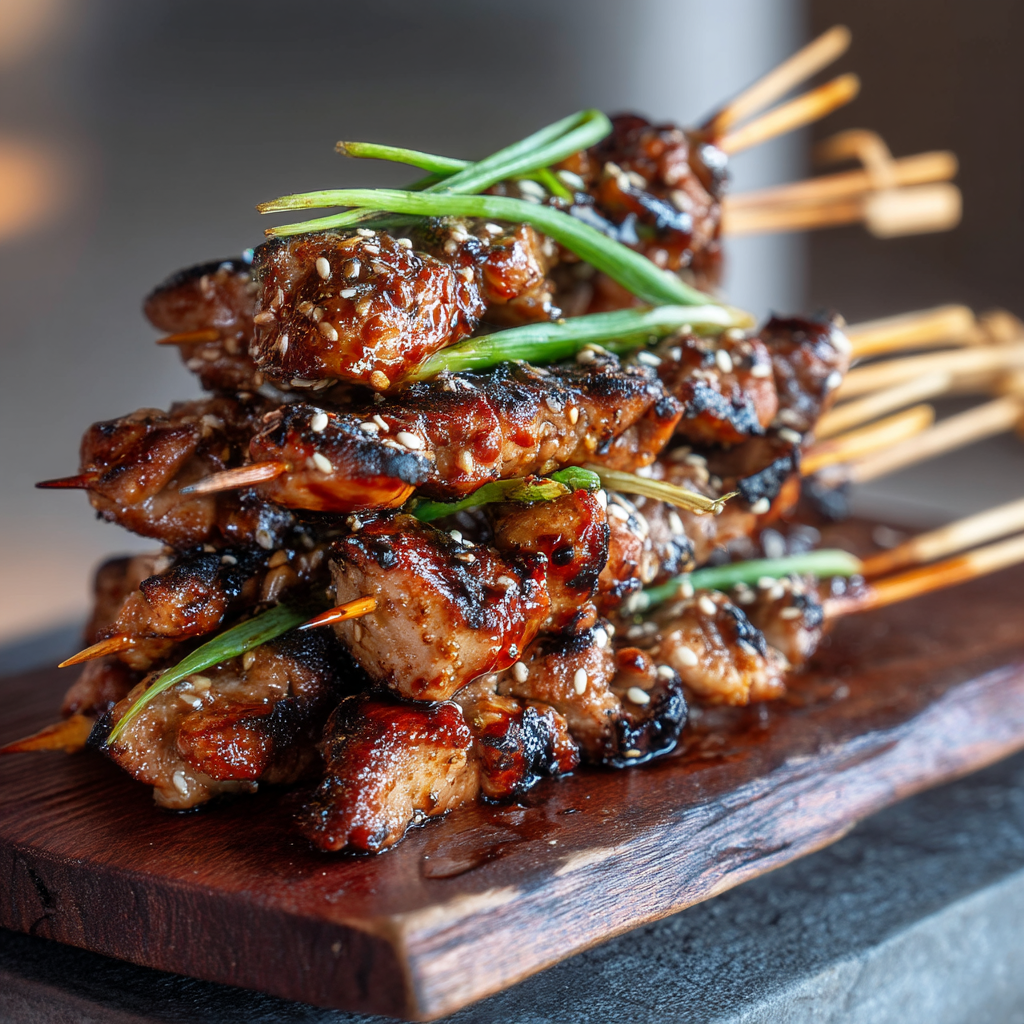
Now for the fun part—assembling the skewers. Take 1 pound of boneless chicken thighs and cut them into bite-sized pieces. Notice I didn’t say “remove the skin”? That’s because traditional yakitori keeps that flavorful skin intact. Thread these juicy pieces onto your pre-soaked bamboo skewers (you did remember to soak them in water for 30 minutes, right?), alternating with 1-inch pieces of green onion if you’d like. This creates those classic yakitori skewers you’d find at any izakaya in Japan. The green onions aren’t just for looks—they add a mild oniony flavor that perfectly complements the chicken.
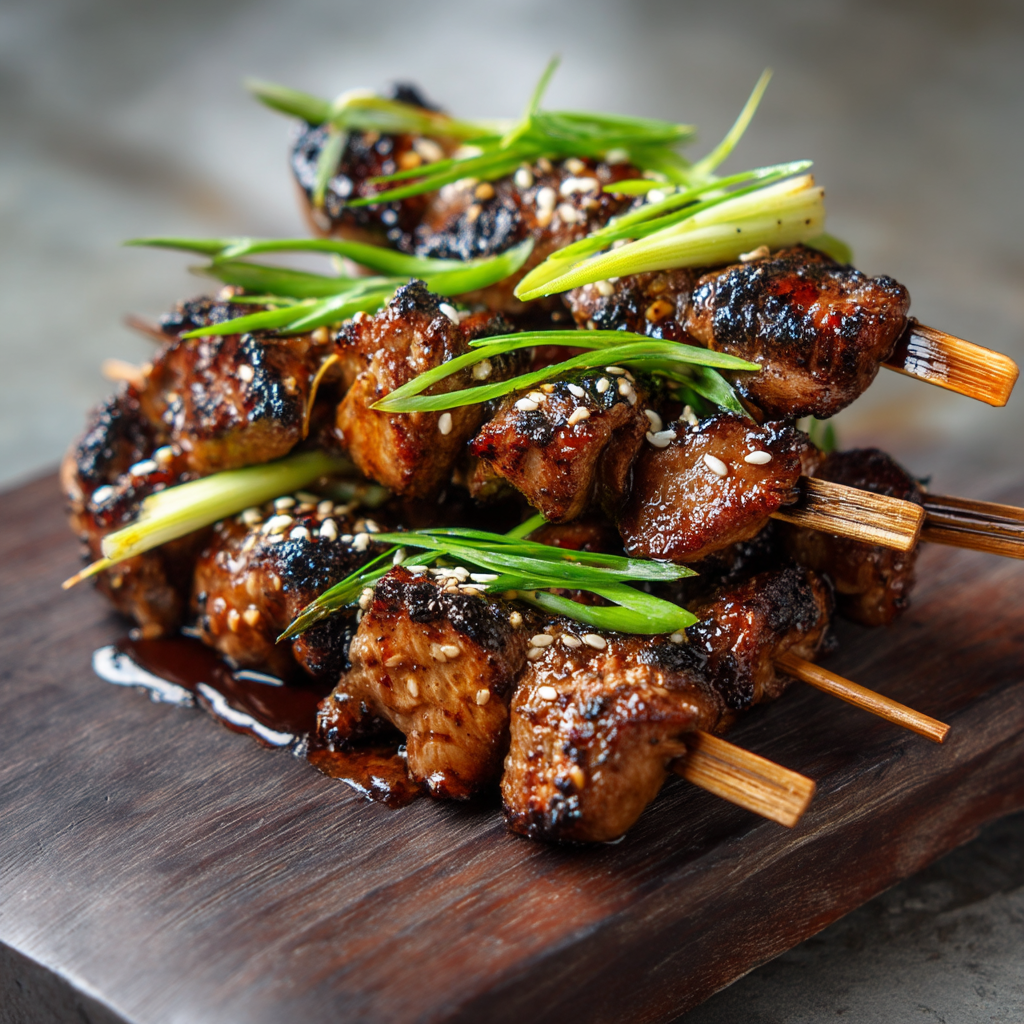
When it’s time to grill, you’ll want to start by cooking the chicken without any sauce. This initial sear helps lock in juices and creates a surface that will caramelize beautifully once the sauce is applied. When you notice the chicken starting to change color, that’s your cue to start brushing on the tare sauce. You’ll want to turn and brush the skewers about three times total, allowing that sauce to build up in thin, flavorful layers rather than one thick coating. This layering technique is the secret to that beautiful lacquered finish on properly made yakitori. The sugars in the sauce will caramelize, creating those irresistible little charred spots that deliver massive flavor. Can you almost taste it?
Authentic Japanese Yakitori Substitutions and Variations
While mastering the classic yakitori recipe is rewarding, the beauty of this Japanese favorite lies in its adaptability. I often recommend substituting chicken breast if you prefer leaner meat, though you’ll sacrifice some juiciness. Don’t have mirin? Try dry sherry or rice vinegar mixed with a touch of sugar.
For exciting variations, try threading on mushrooms, bell peppers, or zucchini between the chicken pieces. You can even experiment with different proteins—shrimp and firm tofu work wonderfully.
The sauce itself invites creativity, too. A dash of ginger, a sprinkle of toasted sesame seeds, or a hint of citrus zest can transform your yakitori into something uniquely yours.
What to Serve with Authentic Japanese Yakitori
Traditional Japanese side dishes elevate your yakitori experience from simply delicious to truly memorable. I love pairing these savory skewers with steamed white rice, which absorbs that delectable yakitori sauce beautifully. Crisp cucumber sunomono salad provides a revitalizing contrast to the rich, grilled chicken.
For a complete izakaya-style meal, why not add some edamame sprinkled with sea salt? They’re perfect for nibbling between bites. Miso soup rounds everything out nicely, while cold beer or sake is the beverage of choice. Pickled vegetables (tsukemono) add that tangy bite that cuts through the richness of the chicken thighs.
Final Thoughts
After mastering these yakitori skewers, you’ll find yourself craving them regularly. There’s something magical about that perfect balance of sweet and savory in the glaze that keeps me coming back for more. The beauty of yakitori is in its simplicity—just good chicken, a fantastic sauce, and the transformative power of fire.
I think what makes these skewers so special is how they connect us to centuries of Japanese culinary tradition while being totally doable in any home kitchen. Why not make them the star of your next gathering? Your guests will think you’re a culinary genius, trust me.
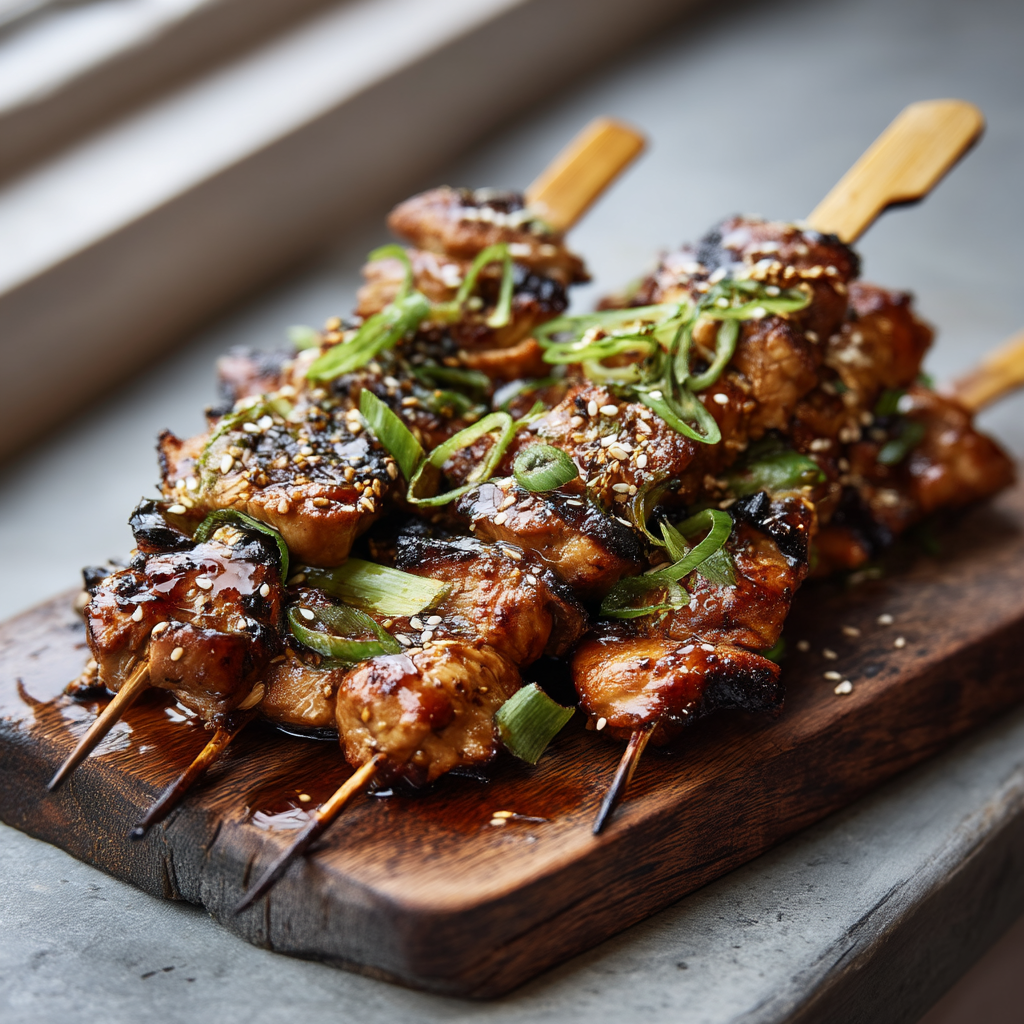
Authentic Japanese Yakitori Chicken Skewers
Ingredients
Equipment
Method
- Combine mirin, soy sauce, sugar, and pressed garlic in a medium saucepan. Simmer over medium heat until the mixture reduces by half, then remove from heat and let cool slightly to thicken into a brushable glaze.
- Cut chicken thighs into bite-sized pieces, keeping the skin on. Thread the chicken pieces onto pre-soaked bamboo skewers, alternating with pieces of green onion.
- Grill the skewers over medium heat. Start by cooking without sauce to sear the chicken. Once it begins to change color, brush with the tare sauce. Turn and brush the skewers approximately three times total, allowing the sauce to caramelize in thin layers for a glossy, charred finish.