I’m always on the hunt for that perfect crunch, and let me tell you, tempura is where it’s at. There’s something magical about that impossibly light batter that shatters between your teeth while protecting the tender morsel within. It seems deceptively simple—just some flour, egg, and ice water—but the technique? That’s where the real artistry happens. Want to know the secrets to achieving that golden, lacy coating that Japanese chefs have perfected over centuries?
Why You’ll Love this Crispy Golden Tempura
If you’ve been intimidated by the thought of making restaurant-quality tempura at home, I’m here to tell you this recipe will change everything. The secret lies in that beautifully light batter—just three egg yolks, ice-cold water, and flour, mixed with a gentle hand.
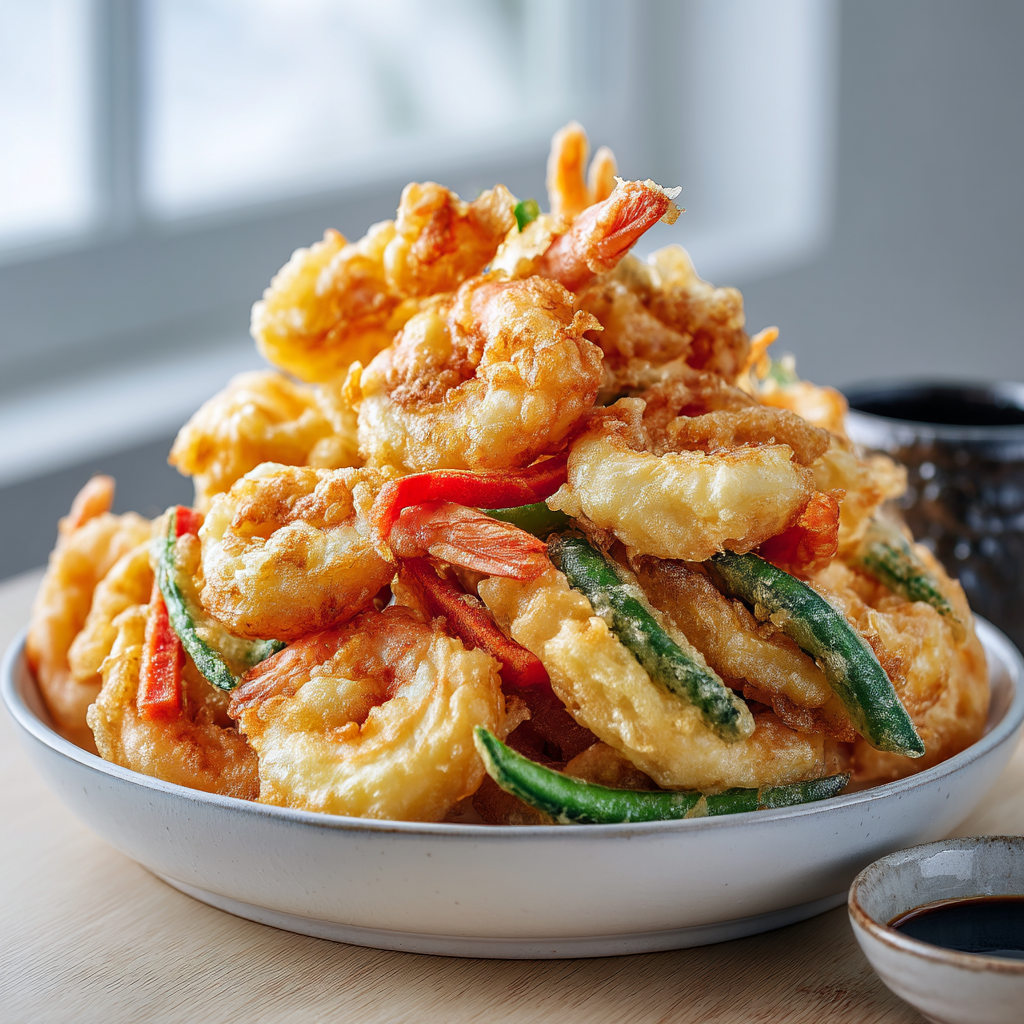
What you’ll get is impossibly crispy, golden morsels that shatter at first bite. No dense, oily coating here. The versatility is what makes tempura so special; shrimp, scallops, mushrooms, sweet potato slices—they all transform into delicate, crunchy bites. And the quick cooking time? Well, that means dinner’s ready in minutes, not hours.
What Ingredients are in Crispy Golden Tempura?
Tempura is one of those seemingly magical dishes that transforms simple ingredients into something utterly delightful. The secret to achieving that perfect, light, crispy coating lies in the batter—which is actually quite simple to prepare at home. With just a handful of basic ingredients and the right technique, you can create restaurant-quality tempura that’s airy and golden, not heavy or greasy. The batter should be mixed minimally (this is essential), and the oil temperature needs to stay consistent for that signature crunch.
- 3 egg yolks
- 2 cups very cold water
- 2½ cups all-purpose flour
- Cooking oil for frying (neutral oil with high smoke point)
- Assorted seafood (options: scallops, shrimp, small halibut pieces)
- Assorted vegetables (options: mushrooms, cauliflower florets, small sweet potato slices)
- Dipping sauces of your choice (traditional tempura sauce recommended)
When selecting your ingredients, freshness matters tremendously. For the batter, make certain your water is ice-cold—some chefs even add ice cubes to maintain the temperature. The coldness prevents gluten formation, which keeps the batter light rather than doughy. As for the frying oil, choose something with a neutral flavor and high smoke point like canola, vegetable, or peanut oil. And perhaps most importantly, select vegetables and seafood that cook quickly, as tempura only fries for a minute or two. Heartier vegetables might benefit from being sliced thinner to guarantee they cook through in that brief frying time, while still maintaining that perfect golden exterior that makes tempura so irresistible.
How to Make this Crispy Golden Tempura
To begin this crispy golden tempura adventure, you’ll need to heat your oil to 375°F in a deep pot or fryer. The temperature is vital here—too cold and the tempura soaks up oil like a sponge, too hot and it burns before cooking through. While the oil heats up, prepare your batter by combining 3 egg yolks with 2 cups of very cold water, mixing them well. The colder the water, the better your results, so don’t hesitate to add an ice cube or two to the water before measuring.
Next comes the most misunderstood step in tempura-making: adding 2½ cups of flour to the egg mixture. Here’s where restraint becomes your greatest virtue. Gradually stir the flour into the liquid, but—and I can’t stress this enough—do not overmix. The batter should look slightly lumpy, with some flour still floating on top. This seemingly imperfect mixture is actually the secret to achieving that legendary light, crispy coating. Once the batter is ready, pat your seafood and vegetables completely dry with paper towels (moisture is the enemy of crispiness), then dip each piece into the batter, allowing excess to drip off for a second or two.
Finally, the moment of transformation arrives. Carefully place a few battered pieces into the hot oil, being careful not to overcrowd the pot. This is quick-cooking magic—just a minute or two is all it takes until your tempura turns a beautiful golden color. Remove each piece with a slotted spoon and drain on paper towels to absorb any excess oil. Work in small batches, maintaining that essential oil temperature between batches. Serve immediately while hot and crispy, with various dipping sauces alongside. The contrast between the light, airy exterior and the perfectly cooked interior creates that memorable tempura experience that’s somehow both delicate and satisfying.
Crispy Golden Tempura Substitutions and Variations
Now that you’ve mastered the basic tempura technique, let’s explore some creative substitutions and variations that’ll keep your tempura game fresh and exciting.
For the batter, you can swap regular flour with rice flour or cornstarch for extra crispiness. Sparkling water instead of still water creates magical lightness. Feeling adventurous? Try adding a splash of vodka—it evaporates quickly, resulting in a crunchier coating.
For vegetables, seasonal options are your friend. Think asparagus in spring, zucchini blossoms in summer, or kabocha squash in fall. Protein-wise, soft-shell crab makes a stunning alternative to shrimp, while tofu offers a delightful vegetarian option.
What to Serve with Crispy Golden Tempura
While your crispy golden tempura takes center stage in this culinary performance, the supporting cast of side dishes and accompaniments can elevate your meal from good to absolutely memorable.
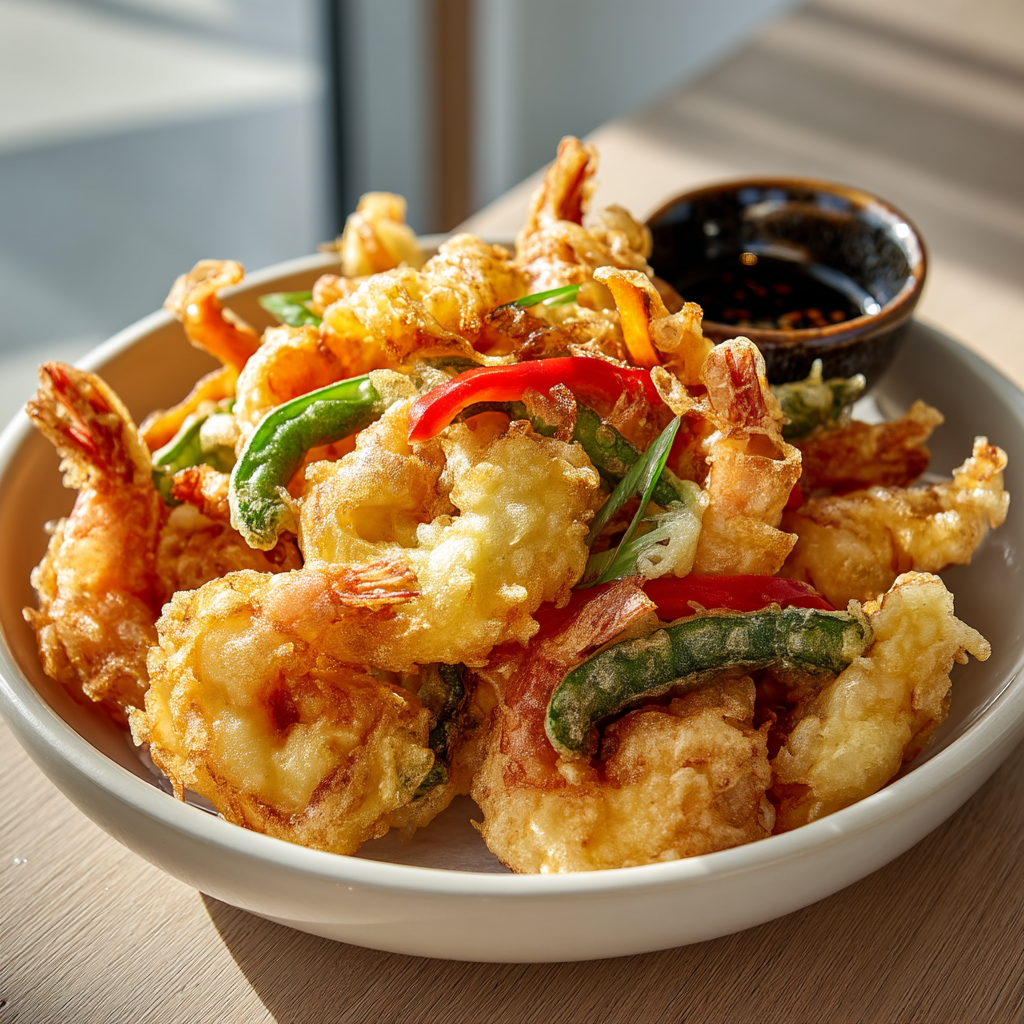
I always recommend serving tempura with a traditional tentsuyu dipping sauce—a simple mix of dashi, mirin, and soy sauce. Steamed rice is non-negotiable, perfectly balancing the crispiness with its soft texture.
Want to round out the meal? Add a light miso soup, pickled vegetables, or a simple cucumber sunomono salad. These sides won’t overpower your tempura masterpiece but will provide delightful flavor contrasts. The key? Keep everything else relatively light and simple.
Final Thoughts
Mastering the art of tempura isn’t just about following a recipe—it’s about embracing the beautiful simplicity of this Japanese classic. The magic happens in those little details: ice-cold water, minimal stirring, and that perfect oil temperature. Remember, those tiny lumps in your batter? They’re actually your friends, creating those delightful crispy edges we all crave.
When you serve your golden creations still sizzling, there’s something almost meditative about the experience. Don’t you think? A humble dish that transforms ordinary ingredients into something extraordinary. Isn’t that what great cooking is all about? Simple ingredients, careful technique, spectacular results.
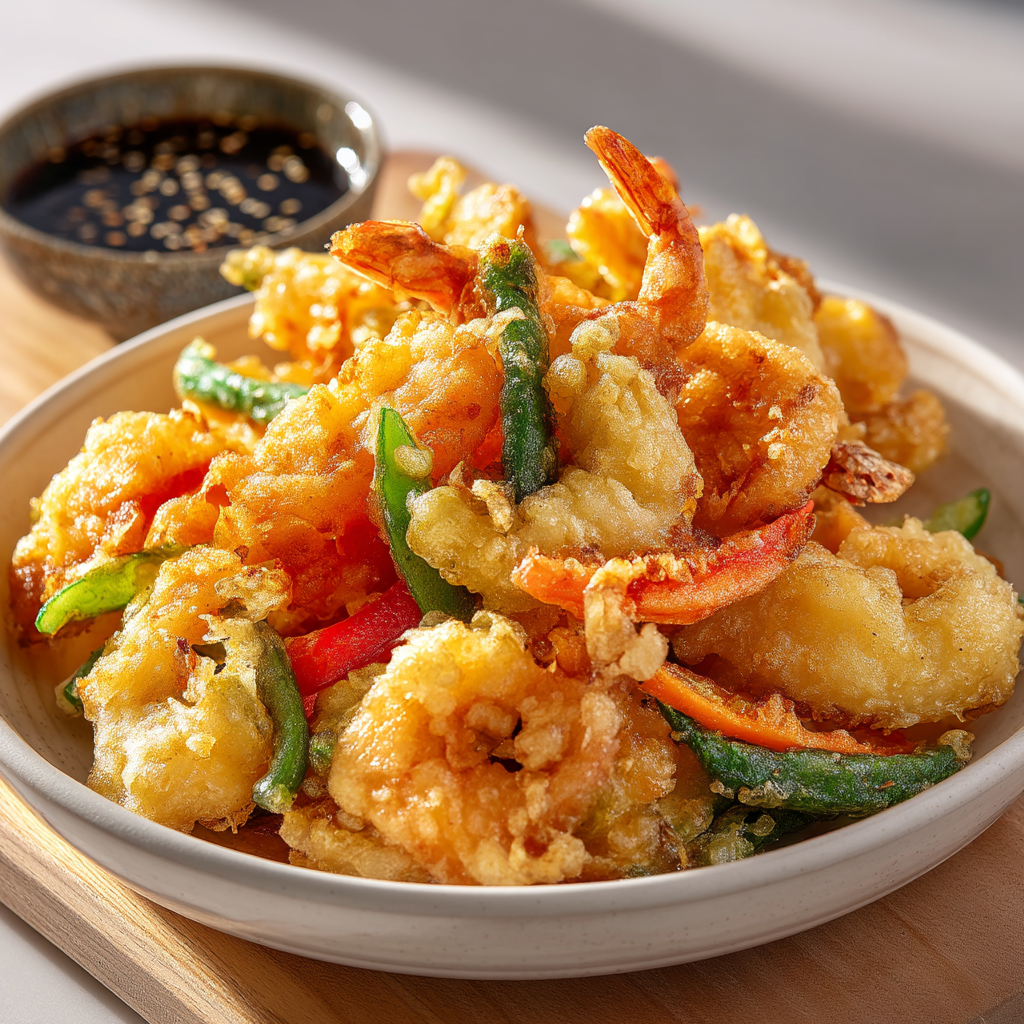
Ultimate Light and Crispy Japanese Tempura
Ingredients
Equipment
Method
- Heat cooking oil to 375°F in a deep pot or fryer.
- In a bowl, combine egg yolks with ice-cold water and mix well.
- Gradually add flour to the egg mixture, stirring minimally until just combined; batter should remain slightly lumpy.
- Pat all seafood and vegetables completely dry with paper towels.
- Dip each piece into the batter, allowing excess to drip off for a few seconds.
- Carefully place battered pieces into hot oil, frying in small batches for 1-2 minutes until golden brown.
- Remove with a slotted spoon and drain on paper towels.
- Serve immediately with dipping sauces.