
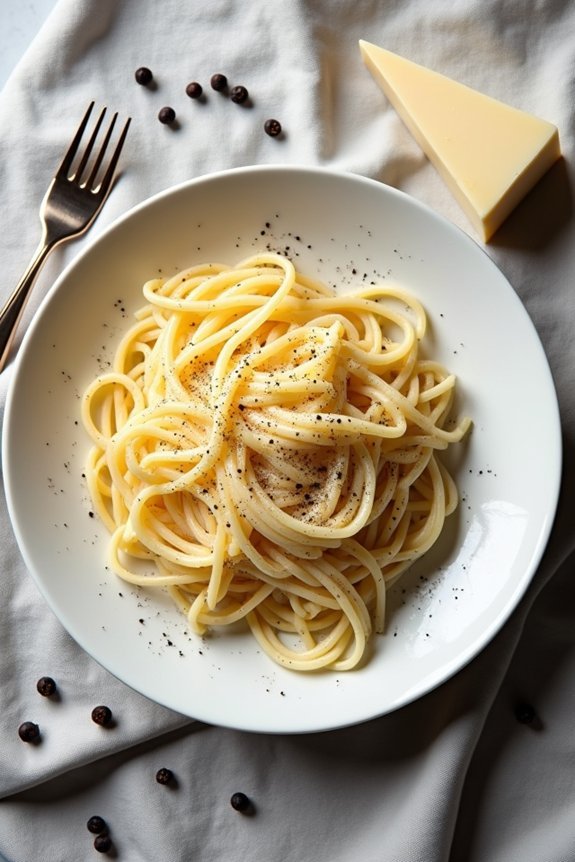
Let me tell you about a pasta dish that’ll change your entire perspective on simple cooking. Cacio e Pepe isn’t just another recipe – it’s a magical transformation of three humble ingredients into something extraordinary. Ever wondered how Italians create such incredible flavor with seemingly minimal effort? What if I told you this creamy, peppery masterpiece could become your new go-to comfort meal? Stick around, and I’ll show you how to turn ordinary spaghetti into a restaurant-worthy experience that’ll make your taste buds dance.
Why You’ll Love this Cacio e Pepe
Because simplicity is the hallmark of great Italian cuisine, cacio e pepe stands out as a pasta masterpiece that’ll make you fall in love with just how delicious something so basic can be. Want to know the magic? It’s about three key ingredients: pasta, cheese, and pepper. That’s it. No fancy techniques, no complicated shopping list. Just pure, simple deliciousness that transforms humble components into something ridiculously satisfying. The creamy sauce clings to each strand of spaghetti, creating a perfectly balanced bite that’ll have you wondering why you’ve ever complicated pasta before. Trust me, this recipe is a total game-changer.
What Ingredients are in Cacio e Pepe?
Cacio e Pepe is a classic Roman pasta dish that proves sometimes the simplest ingredients can create the most magical meals. With just a handful of pantry staples, you can transform ordinary spaghetti into a creamy, peppery masterpiece that’ll make your taste buds dance.
Ingredients:
- 12 ounces spaghetti
- 4 tablespoons unsalted butter, room temperature
- 1 tablespoon extra-virgin olive oil
- 2/3 cup grated pecorino romano cheese
- Salt, to taste
- Fresh ground black pepper, to taste (and we mean lots of it)
The beauty of Cacio e Pepe lies in its simplicity. Each ingredient plays a vital role, from the sharp pecorino romano that gives the dish its salty backbone to the freshly ground black pepper that provides a spicy kick. Quality matters here – opt for the best cheese and freshest pepper you can find, as these are the stars of this minimalist culinary performance. Remember, in Italian cooking, less is often more, and this recipe is the perfect example of how a few thoughtful ingredients can create something truly extraordinary.
How to Make this Cacio e Pepe
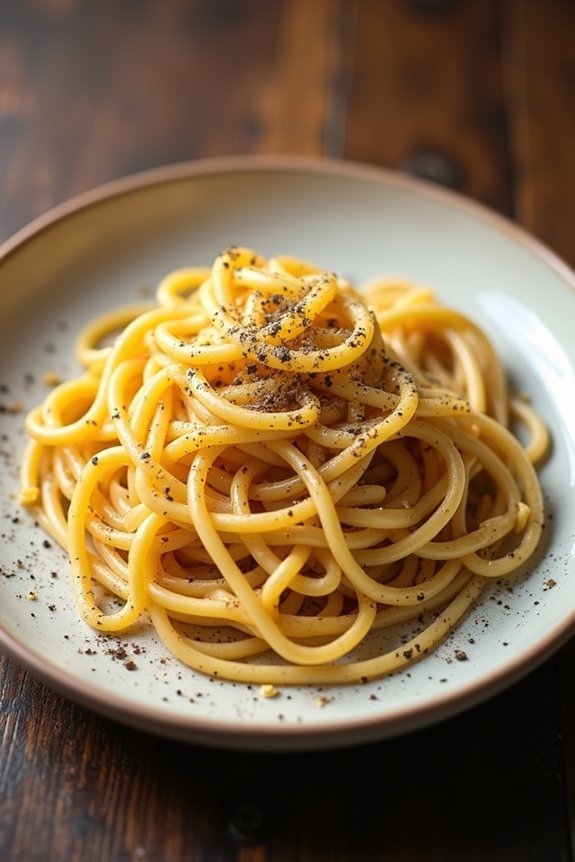
Making Cacio e Pepe might seem intimidating, but trust me, it’s easier than trying to fold a fitted sheet. Start by bringing a large pot of salted water to a boil. Grab those 12 ounces of spaghetti and cook them until they’re perfectly al dente – that magical sweet spot between too firm and too soft, which usually takes about 8 to 10 minutes.
While the pasta bubbles away, create your flavor base. In a large bowl, take 4 tablespoons of room-temperature unsalted butter and mash it together with 1 tablespoon of extra-virgin olive oil and 2/3 cup of grated pecorino romano cheese. The goal is to transform these ingredients into a smooth, creamy paste that’ll become the soul of your sauce. Think of it like creating a flavor foundation that’ll make your taste buds do a happy dance.
When the pasta is cooked, drain it but – and this is essential – save about ½ cup of that starchy pasta water. Transfer the spaghetti directly into the bowl with your butter mixture. Now comes the magic: toss everything together, using the reserved pasta water to help create a thick, glossy sauce that clings to every single strand. Don’t be shy with the seasoning – add salt to taste, and then go wild with freshly ground black pepper. We’re talking pepper that’ll make your nose tingle. Divide the pasta among plates, and serve immediately. The key is to enjoy it while it’s hot and the sauce is at its creamy, peppery best.
Cacio e Pepe Substitutions and Variations
While traditional Cacio e Pepe is a minimalist Italian classic, home cooks can definitely play around with some creative twists. Want to mix things up? Try swapping pecorino romano for parmigiano-reggiano, though the flavor will shift slightly. Whole wheat spaghetti adds a nutty dimension, while gluten-free options work for those with dietary restrictions. Feeling adventurous? Toss in some crispy pancetta or add roasted garlic for depth. For a vegetarian spin, nutritional yeast can mimic the cheesy umami. Fresh herbs like basil or thyme can brighten the dish, lending unexpected complexity to this simple Roman favorite.
What to Serve with Cacio e Pepe
After exploring creative variations on this classic pasta dish, you might wonder what culinary companions could elevate your Cacio e Pepe experience. A crisp white wine like Frascati or Pinot Grigio pairs beautifully, cutting through the rich, creamy sauce. For sides, a simple arugula salad with lemon vinaigrette provides bright, peppery contrast. Roasted seasonal vegetables like asparagus or zucchini work wonderfully. Want protein? A light prosciutto or grilled chicken can complement without overwhelming. The key is keeping accompaniments simple, letting the pasta’s bold pecorino and black pepper flavors shine through.
Final Thoughts
Though Cacio e Pepe might seem simple, its magic lies in the precision of technique and quality of ingredients. This classic Roman dish proves that sometimes less truly is more. I’m convinced that with just a few pantry staples, you can create something extraordinary. Wondering how such minimal ingredients transform into culinary poetry? The secret’s in the careful balance: perfectly cooked pasta, sharp pecorino, and a generous hand with black pepper. Master these elements, and you’ll understand why this humble recipe has captured the hearts of food lovers worldwide.