
I’ve always believed that a perfect Pad Thai is worth mastering at home—why settle for takeout when you can create the real deal? This iconic Thai dish balances sweet, sour, salty, and umami flavors in one harmonious plate. The secret lies in the sauce and cooking technique, not complicated ingredients or tools. Ready to transform ordinary rice noodles into something extraordinary? Let me show you how to capture authentic Thai street food magic right in your kitchen.
Why You’ll Love this Authentic Pad Thai
If you’ve been searching for a taste of Thailand that’s both authentic and approachable, you’re going to absolutely love this Pad Thai recipe. I’m talking about the perfect balance of sweet, sour, salty, and umami flavors that dance on your tongue with every bite.
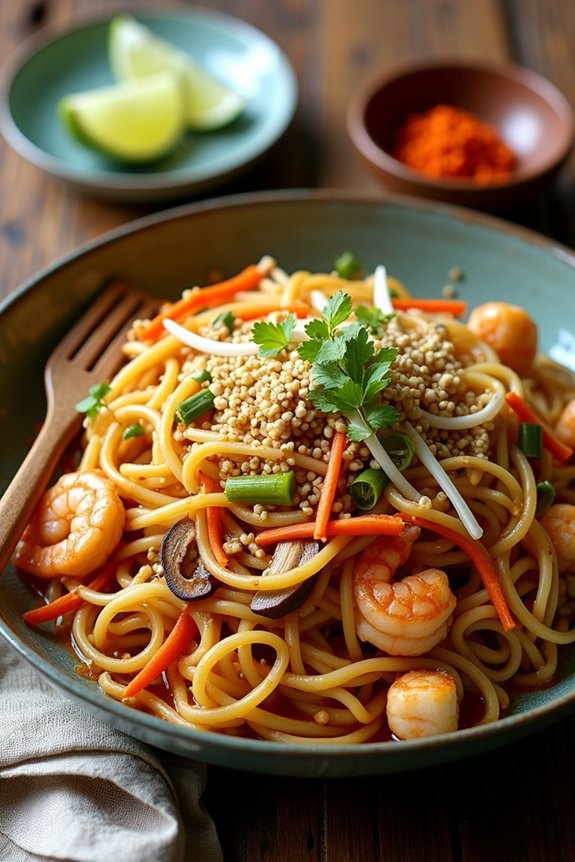
What makes this recipe special? The combination of fish sauce, rice vinegar, and tomato paste creates that distinctive Pad Thai sauce that coats every strand of rice noodle. Plus, the mix of chicken, shrimp, crunchy peanuts, and fresh bean sprouts gives you wonderful textural contrasts. Can you imagine a more satisfying one-dish meal?
What Ingredients are in Authentic Pad Thai?
Pad Thai is one of those dishes that seems complex but is actually quite approachable when you break it down into components. The magic lies in balancing the sweet, sour, salty, and umami flavors that make this Thai street food so irresistible. With just a handful of key ingredients and a hot wok, you can create restaurant-quality Pad Thai right in your home kitchen.
- 8 ounces medium width rice noodles
- 6 tablespoons fish sauce
- 1/2 cup unseasoned rice vinegar
- 3 tablespoons tomato paste
- 1/2 cup sugar
- 2 eggs
- 2 1/2 tablespoons canola oil
- 5-6 minced garlic cloves
- 1/4 cup julienned baby carrots
- 4 ounces sliced mushrooms
- 5 chopped green onions
- 1/2 pound cooked, bite-sized chicken breast pieces
- 1/2 pound cooked, peeled and deveined shrimp
- 3/4 cup coarsely chopped dry-roasted unsalted peanuts
- 4 ounces bean sprouts
- 1 lime, cut into wedges
- Crushed red pepper flakes (optional)
When shopping for these ingredients, quality makes a difference. The fish sauce especially—look for a good Thai brand if possible, as it provides that distinctive umami flavor that’s vital to authentic Pad Thai. For the rice noodles, medium width works best as they hold up to stir-frying without breaking apart. And while this recipe calls for both chicken and shrimp, you could easily make it with just one protein or substitute tofu for a vegetarian version. Just make sure your bean sprouts are fresh and crisp, as they add that essential textural contrast that makes Pad Thai so satisfying.
How to Make this Authentic Pad Thai
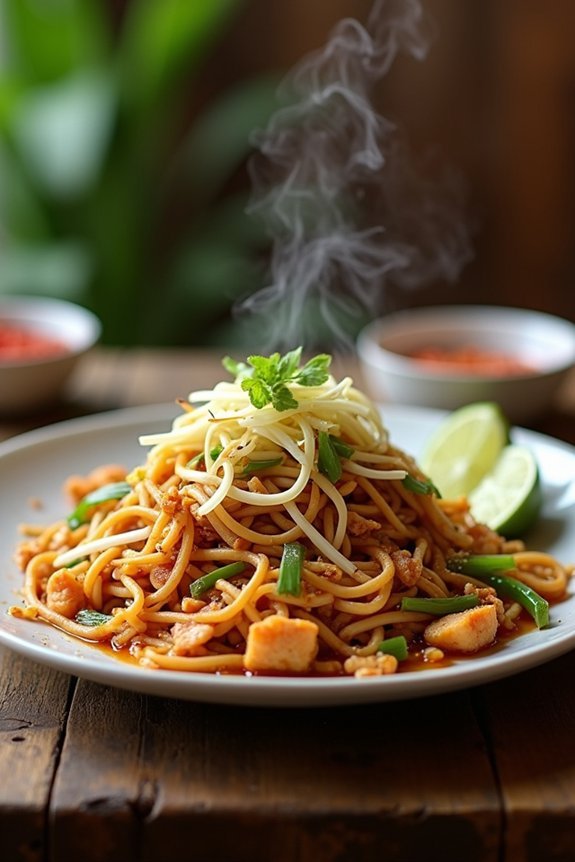
To start your authentic Pad Thai journey, first prepare the sauce by mixing 6 tablespoons of fish sauce, 1/2 cup of unseasoned rice vinegar, 3 tablespoons of tomato paste, and 1/2 cup of sugar in a small bowl. This harmonious blend creates that perfect balance of sweet, sour, and savory flavors that defines a proper Pad Thai. Set this aside while you cook your 8 ounces of medium width rice noodles according to the package directions, but aim for slightly al dente—they’ll continue cooking in the wok later.
Next, heat up your wok or large skillet and scramble 2 eggs (lightly seasoned with garlic powder if you want that extra flavor dimension). Once cooked, remove them and set aside. Now comes the layering of flavors. Add 2 1/2 tablespoons of canola oil to your hot pan, then throw in 5-6 minced garlic cloves along with 1/4 cup of julienned baby carrots and 4 ounces of sliced mushrooms. Let these sizzle for about 2-3 minutes until they start to soften and become fragrant. The aroma at this point? Absolutely mouthwatering.
Pour in your prepared sauce mixture, giving everything a good stir to combine. Now it’s time to add your proteins and aromatics—5 chopped green onions, the scrambled eggs, 1/2 pound of cooked chicken breast pieces, 1/2 pound of cooked shrimp, and 3/4 cup of chopped peanuts. After about 2 minutes of cooking and stirring, these ingredients should be heated through and starting to absorb the sauce. Finally, add your cooked noodles and 4 ounces of bean sprouts, tossing everything together for about 2 more minutes until well combined and heated through. Serve your masterpiece with lime wedges for squeezing over the top and crushed red pepper flakes for those who like a bit of heat. The contrast between the soft noodles, crunchy peanuts and bean sprouts, and tangy sauce creates that authentic Pad Thai experience right in your own kitchen.
Authentic Pad Thai Substitutions and Variations
While authentic Pad Thai has specific traditional ingredients, you can certainly make adaptations based on what’s available in your pantry or dietary needs.
For protein swaps, try tofu instead of chicken and shrimp for a vegetarian version, or go all-in with just shrimp if you prefer. Not a fan of fish sauce? Soy sauce works in a pinch, though you’ll miss that distinctive umami depth. Brown sugar can replace white sugar, and apple cider vinegar can stand in for rice vinegar.
No bean sprouts? Try thinly sliced cabbage for that essential crunch. The beauty of Pad Thai? It’s forgiving, adaptable, delicious.
What to Serve with Authentic Pad Thai
Although Pad Thai shines as a complete meal on its own, pairing it with complementary sides elevates the dining experience to restaurant quality at home. I love serving a cooling cucumber salad with rice vinegar dressing to balance the dish’s savory heat. Fresh spring rolls with peanut dipping sauce make perfect appetizers, while Thai iced tea cuts through the richness with its sweet creaminess.
For a more substantial spread, consider adding satay skewers or tom yum soup. Don’t forget a simple plate of sliced mango for dessert—trust me, the sweet-tart flavor cleanses your palate perfectly after those complex noodles.
Final Thoughts
After mastering this authentic Pad Thai recipe, you’ll never need takeout again. There’s something deeply satisfying about creating this iconic dish in your own kitchen, balancing those perfect sweet, sour, salty, and umami notes.
What I love most about Pad Thai is its versatility. Can’t find bean sprouts? Substitute thinly sliced cabbage. Not a fan of shrimp? Double the chicken. The beauty lies in making it your own.