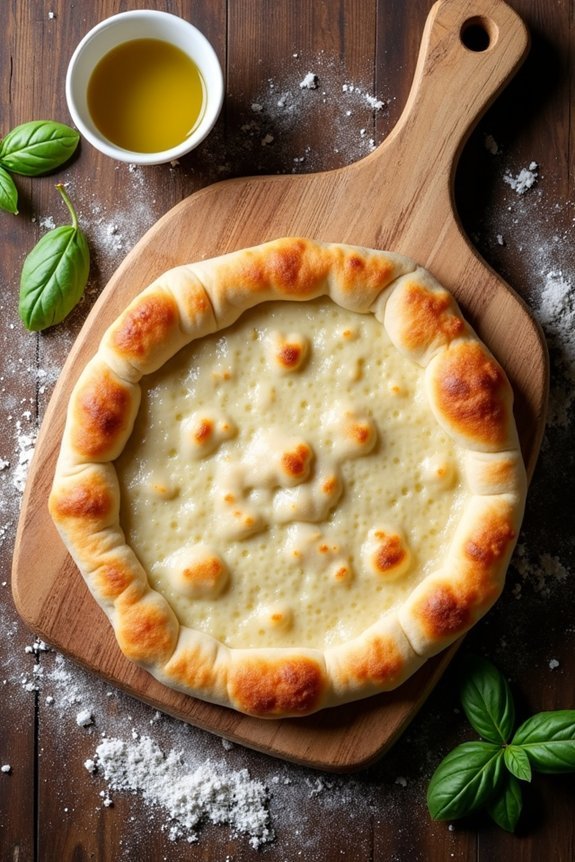

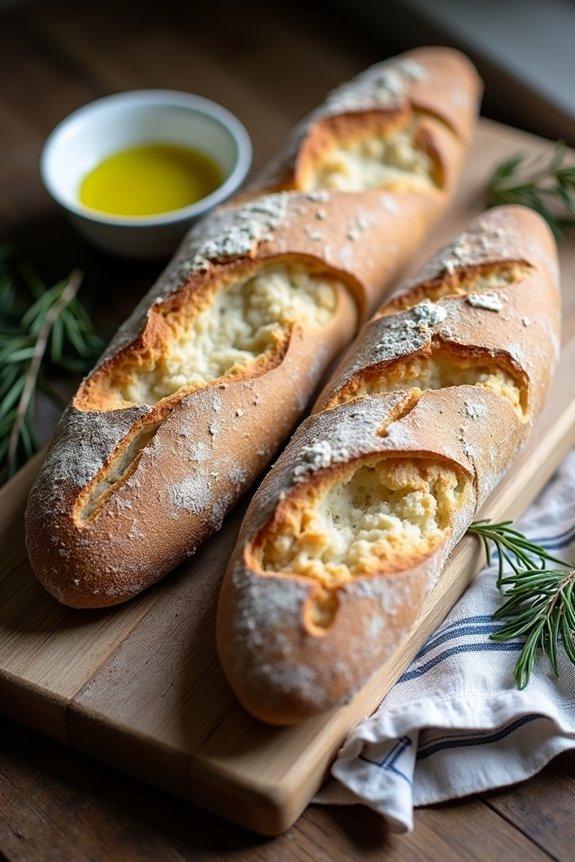
I’ve always believed that great bread is the foundation of memorable meals, and this rustic Italian ciabatta might just change your bread game forever. With its crispy crust and airy, chewy interior, it brings authentic Italian flavors right to your kitchen table. Don’t worry about fancy equipment—this recipe needs just basic tools and a bit of patience. Wonder what makes this ciabatta so special compared to store-bought versions? The secret lies in a technique that’s simpler than you might think.
Why You’ll Love this Artisan Ciabatta
If you’ve been searching for the perfect homemade bread that delivers both incredible flavor and that distinctively chewy texture, this rustic Italian ciabatta recipe is about to become your new obsession.
I’m particularly fond of the airy, open crumb structure that makes ciabatta so special. Those gorgeous holes aren’t just beautiful—they’re perfect for capturing pools of olive oil or soaking up pasta sauce. The contrast between the crispy exterior crust and soft interior is simply magical.
What’s even better? You don’t need fancy equipment. Just a food processor, some patience for the sponge method, and you’re on your way to authentic Italian bread heaven.
What Ingredients are in Artisan Ciabatta?
Making authentic ciabatta bread requires simple ingredients that come together to create that rustic Italian loaf with its signature airy texture and chewy crust. The magic of ciabatta lies in its two-part process – first creating a “sponge” (a pre-ferment that develops flavor) and then combining it with the remaining ingredients to form the final dough. I always find it fascinating how such basic pantry staples can transform into something so spectacular when given time to develop.
For the Sponge:
- 1 cup bread flour
- 2 teaspoons sugar
- 2½ teaspoons dry yeast
- ¾ cup very warm water (120 to 130°F)
For the Ciabatta Dough:
- 4 cups bread flour
- ¼ cup warm water (105 to 115°F)
- 2 teaspoons nonfat dry milk powder
- 2½ teaspoons dry yeast
- 1 teaspoon salt
- 2 tablespoons cornmeal (for dusting the baking sheet)
- 2 tablespoons bread flour (for sprinkling on top)
The quality of flour matters tremendously in this recipe. You’ll notice we’re using bread flour rather than all-purpose, which gives the ciabatta its characteristic structure and chew. The higher protein content creates those beautiful, irregular holes that define good ciabatta. Another interesting ingredient is the nonfat dry milk powder, which contributes to the golden color of the crust while adding a subtle richness to the flavor. Can you substitute ingredients? Sometimes, but each plays a specific role in creating that authentic ciabatta texture and taste we’re after.
How to Make this Artisan Ciabatta
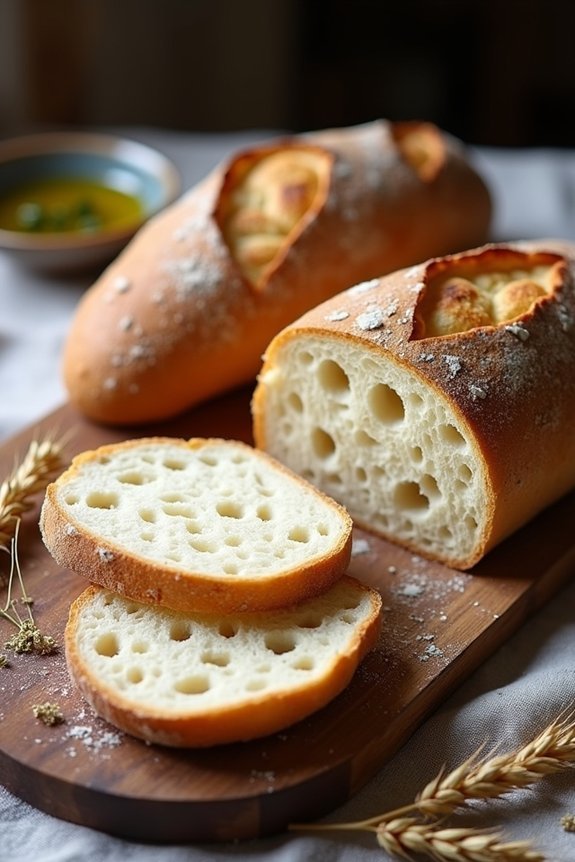
The magic of ciabatta begins with the sponge, which needs time to develop those complex flavors we all crave. To start, lightly spoon 1 cup of bread flour into a measuring cup and level it with a knife for accuracy. Combine this flour with 2 teaspoons of sugar and 2½ teaspoons of dry yeast in a food processor, then add ¾ cup of very warm water (120-130°F). Process this mixture for about a minute until well blended. Transfer this wet mixture to a bowl, cover it, and let it chill anywhere from 2 to 24 hours—the longer it rests, the more flavor develops. Think of this step as giving the yeast a comfortable little home to do its magic.
Once your sponge has developed, it’s time to create the full dough. Measure out 4 cups of bread flour (using the spoon-and-level method again), then combine it with your sponge, ¼ cup warm water (105-115°F), 2 teaspoons nonfat dry milk powder, another 2½ teaspoons of dry yeast, and 1 teaspoon of salt in your food processor. Process until the dough forms a ball, then continue for one additional minute. The dough will be quite sticky and soft when you turn it out onto a floured surface—this is exactly what you want for those characteristic air pockets! Divide the dough in half, keeping one portion covered while you work with the other.
Now comes the shaping, which gives ciabatta its distinctive “slipper” appearance. Roll each portion into a 12×16-inch rectangle, then transfer it to a baking sheet lined with parchment paper and sprinkled with 2 tablespoons of cornmeal. Gently taper the ends to create that classic slipper shape, then sprinkle each loaf with 1 tablespoon of bread flour. Cover the shaped loaves and let them rise for about 30 minutes, or until they’ve doubled in size. When they’re ready, bake in a preheated 425°F oven for 25 minutes. You’ll know they’re done when tapping the bottom produces a hollow sound—the universal language of perfectly baked bread. Remove from the pan and cool on a wire rack, perhaps while sneaking glances at your beautiful creation. Who could blame you?
Artisan Ciabatta Substitutions and Variations
While traditional ciabatta calls for bread flour, you can experiment with several delicious variations that’ll completely transform your homemade loaves. Try substituting up to half the bread flour with whole wheat for a nuttier flavor and extra fiber. Not a fan of dairy? Replace the dry milk powder with soy milk powder or simply omit it altogether.
For a Mediterranean twist, fold in chopped olives, sun-dried tomatoes, or rosemary into your dough before shaping. Can’t find cornmeal? Semolina works beautifully as a substitute for dusting your parchment paper. And don’t worry about the perfect shape—that’s the beauty of rustic bread!
What to Serve with Artisan Ciabatta
What could possibly elevate your freshly baked ciabatta bread more than perfect accompaniments? I’m thinking olive oil—the good stuff—with a splash of balsamic vinegar for dipping. Divine. Or maybe a spread of creamy burrata topped with fresh tomatoes and basil, Italian-style.
For heartier pairings, ciabatta makes the foundation for an outstanding sandwich. Think prosciutto, mozzarella, and arugula, or roasted vegetables with pesto. You can’t go wrong.
My personal favorite? Slice it thick, brush with garlic butter, and serve alongside pasta. The way it soaks up sauce is, frankly, what bread dreams are made of.
Final Thoughts
After baking this rustic ciabatta bread, I’m convinced anyone can bring a slice of Italy into their kitchen. There’s something magical about the way those airy holes form within the chewy interior, all while that golden crust crackles under your touch.
The process might seem intimidating at first—all that waiting for the sponge, the sticky dough handling—but trust me, it’s worth every minute. Can you imagine the compliments you’ll receive when you casually mention, “Oh, this ciabatta? I made it myself.” Your kitchen will smell like an Italian bakery, and isn’t that reward enough?