
I’ve been obsessing over the perfect Wiener Schnitzel for years, and there’s something magical about that first bite—crispy exterior giving way to tender veal. You might think achieving restaurant-quality schnitzel at home is impossible, but I’m here to tell you it’s all about technique. The secret? Proper pounding, a three-step breading process, and that little-known refrigeration trick that makes all the difference. Want to know what separates a good schnitzel from a truly memorable one?
Why You’ll Love this Authentic Wiener Schnitzel
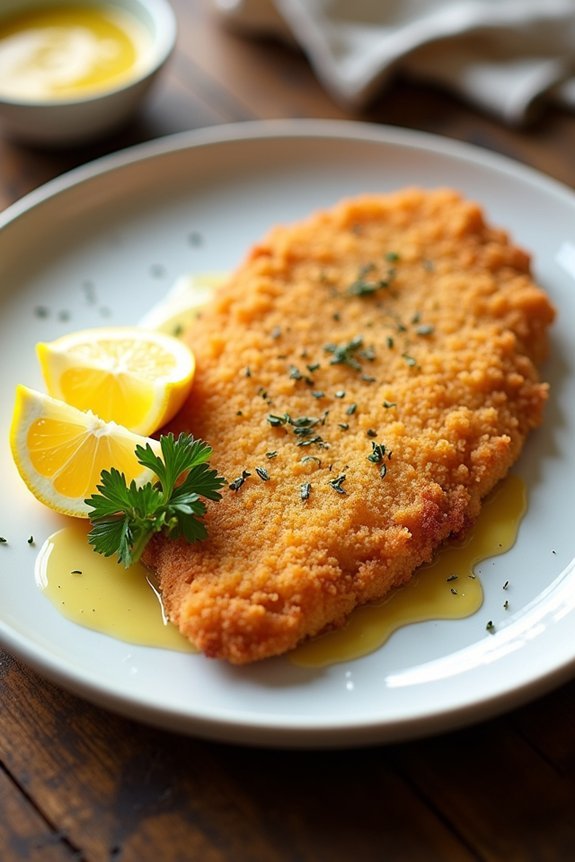
Three reasons you’ll love this authentic Wiener Schnitzel recipe—it’s surprisingly simple, undeniably impressive, and absolutely delicious. Trust me, there’s something magical about that golden, crispy exterior giving way to tender veal inside. I’m talking restaurant-quality results right in your kitchen.
The refrigeration step is my secret weapon—it helps the breading stick perfectly during frying. And that lemon-butter sauce? It’s the finishing touch that elevates this dish from good to unforgettable.
Can’t you just hear that satisfying crunch as your fork breaks through the breading? Classic Viennese cuisine, ready in under an hour.
What Ingredients are in Authentic Wiener Schnitzel?
Authentic Wiener Schnitzel is a classic Austrian dish that’s stood the test of time for good reason. The combination of tender veal coated in crispy breadcrumbs creates a delightful texture contrast that’s simply irresistible. While it might sound fancy, the ingredient list is surprisingly straightforward, making this a doable dish even for home cooks who might be intimidated by European cuisine.
- 1½ pounds veal cutlets
- ½ cup flour
- 1 egg, beaten
- 1 cup breadcrumbs, finely ground
- 6 tablespoons butter
- 1 lemon
- Salt
- Pepper
When shopping for these ingredients, quality really matters. The veal should be as fresh as possible, and if you can find organic or locally raised veal, even better. The breadcrumbs? I prefer making my own by pulsing day-old bread in a food processor—they have a better texture than the store-bought variety. And don’t skimp on the butter, folks. A good European-style butter with higher fat content will give you that authentic flavor that makes Wiener Schnitzel so special. Remember, simple dishes like this rely on the quality of their ingredients, not complicated techniques or exotic additions.
How to Make this Authentic Wiener Schnitzel
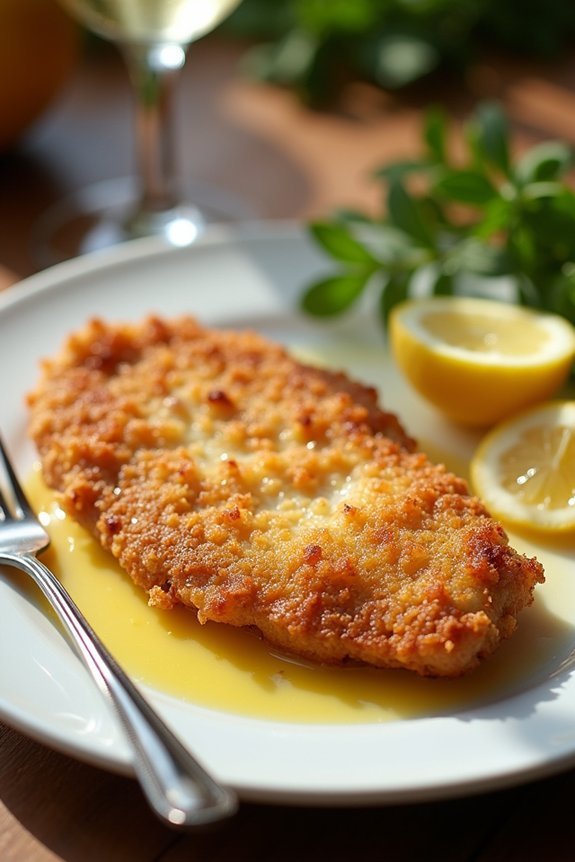
Let’s get down to business with this classic Austrian dish. The first essential step is properly preparing your 1½ pounds of veal cutlets. Place them between two sheets of waxed paper and pound them until they’re nice and thin. This tenderizing process might feel a bit aggressive (sometimes we all need to take out our frustrations on dinner), but trust me, thin cutlets are the secret to authentic schnitzel that cooks quickly and evenly.
Now for the breading station setup, which is where the magic happens. You’ll need three separate dishes: one with ½ cup flour, another with 1 beaten egg, and a third with 1 cup of finely ground breadcrumbs. Season each dish with salt and pepper—yes, all three—as this creates layers of flavor throughout your schnitzel. Dip each cutlet first in flour (shaking off any excess), then into the beaten egg, and finally coat it with breadcrumbs. The key here is making sure the breadcrumb coating is thin but complete, covering every millimeter of that cutlet. No naked spots allowed, folks. Once breaded, refrigerate your cutlets on a waxed paper-covered platter for about an hour. This resting time helps the coating adhere properly, and I’ve found it makes all the difference between a coating that stays put and one that slides right off in the pan.
When you’re ready to cook, melt 4 teaspoons of butter in a large skillet and get it nice and hot. The cutlets should sizzle the moment they hit the pan—a quiet pan means it’s not hot enough. Brown the cutlets quickly on each side until they reach that perfect golden hue, which should only take a couple minutes per side. Once they’re done, set them aside while you prepare the finishing touch: a simple but decadent lemon-butter sauce. Melt the remaining 2 tablespoons of butter in your pan and squeeze in the juice from one lemon. Stir this mixture together and then pour it over your crispy schnitzel just before serving. The tangy brightness of the lemon butter brings everything together in the most mouthwatering way. Can you already smell the buttery goodness wafting through your kitchen?
Authentic Wiener Schnitzel Substitutions and Variations
While traditional Wiener Schnitzel calls for veal cutlets, I understand that not everyone can find them easily or might prefer alternatives. Pork or chicken cutlets make excellent substitutes—just be sure to pound them thin, about 1/4-inch thick. The secret’s in the thinness, not necessarily the meat.
For breadcrumb variations, try panko for extra crunch or add herbs like parsley or thyme to your coating. Can’t have eggs? A light coating of mustard helps breadcrumbs stick. And vegetarians, don’t feel left out—eggplant slices work surprisingly well with this technique, though they need less pounding, more patting dry.
What to Serve with Authentic Wiener Schnitzel
A perfectly crispy Wiener Schnitzel deserves equally impressive side dishes to complete your Austrian culinary experience. I recommend serving it with traditional potato salad dressed with vinegar and oil rather than mayo—the tanginess cuts through the richness beautifully.
Cucumber salad with dill, a squeeze of lemon, and a dollop of lingonberry jam on the side adds bright, acidic notes that balance the buttery schnitzel. For a complete meal, consider spätzle (those tiny German dumplings) or parsley potatoes.
Want something green? Simple butter-sautéed vegetables or a crisp green salad work wonderfully. Trust me, these sides will transport you straight to a Viennese café.
Final Thoughts
Once you’ve mastered the technique of creating perfect Wiener Schnitzel, you’ll understand why this dish has remained a culinary treasure for generations. The secret lies in those little details—properly pounding the veal, maintaining the right temperature for frying, and that final touch of lemony butter that brings everything together.
I’m convinced there’s something magical about the sound of that first bite, the delicate crunch giving way to tender meat. Isn’t that what cooking is all about? Creating moments of pure pleasure around the table with those you love, one golden, crispy schnitzel at a time.