I’ve been dreaming of cool, invigorating gazpacho ever since the temperatures started climbing past 80 degrees. There’s something magical about that first spoonful of chilled tomato goodness that instantly transports me to a breezy Mediterranean coastline. What makes this version special? It’s the perfect balance of chunky textures and silky broth, with fresh dill adding an unexpected twist you won’t find in traditional recipes. Ready to discover summer’s most invigorating no-cook meal?
Why You’ll Love this Fresh Gazpacho
What makes a bowl of gazpacho so irresistible on a hot summer day? It’s that perfect balance of ripe tomatoes, crisp peppers, and cooling cucumbers that creates a symphony in every spoonful. Trust me, this Mediterranean version takes the classic to new heights.
I’m obsessed with how this recipe maintains that delightful chunky texture—never too smooth, never too rustic. The splash of red wine vinegar adds just enough tang to wake up your taste buds, while the fresh dill brings an unexpected herbaceous note. No cooking required, just blending and chilling. Summer in a bowl, really.
What Ingredients are in Fresh Gazpacho?
Fresh Mediterranean gazpacho is all about vibrant, raw vegetables coming together in a cool, invigorating soup that’s perfect for hot summer days. This recipe relies on garden-fresh produce and simple seasonings that allow the natural flavors to shine through. The best part? No cooking required—just some chopping, blending, and a bit of patience while it chills.
- 6 large ripe tomatoes
- 1 red pepper
- 1 yellow pepper
- 3 stalks celery
- 2 red onions
- 2 shallots
- 2 cucumbers
- 1/2 cup red wine vinegar
- 1/2 cup olive oil
- 1 1/2 cups V8 vegetable juice
- 1/4 teaspoon cayenne pepper
- 1/2 cup chopped fresh dill
- Salt and fresh ground pepper (to taste)
When shopping for gazpacho ingredients, quality really matters. Look for the ripest, juiciest tomatoes you can find—they’re the backbone of this dish. Feel free to substitute different colored peppers if that’s what you have on hand, or adjust the heat level by adding more or less cayenne. Can’t find fresh dill? Basil or parsley would work as alternatives, though the flavor profile will change a bit. Remember, gazpacho tastes even better the next day when the flavors have had time to meld together, so consider making it ahead of when you plan to serve it.
How to Make this Fresh Gazpacho
Making Mediterranean gazpacho is all about preserving the fresh flavors of raw vegetables while creating a harmonious blend. Start by washing and coarsely chopping your 6 large ripe tomatoes, making sure to save all that precious juice—it’s liquid gold for the soup’s base. Core, seed, and roughly chop the 1 red pepper and 1 yellow pepper, then peel, seed, and chop your 2 cucumbers. For the aromatics, dice 3 stalks of celery and prepare your 2 red onions and 2 shallots.
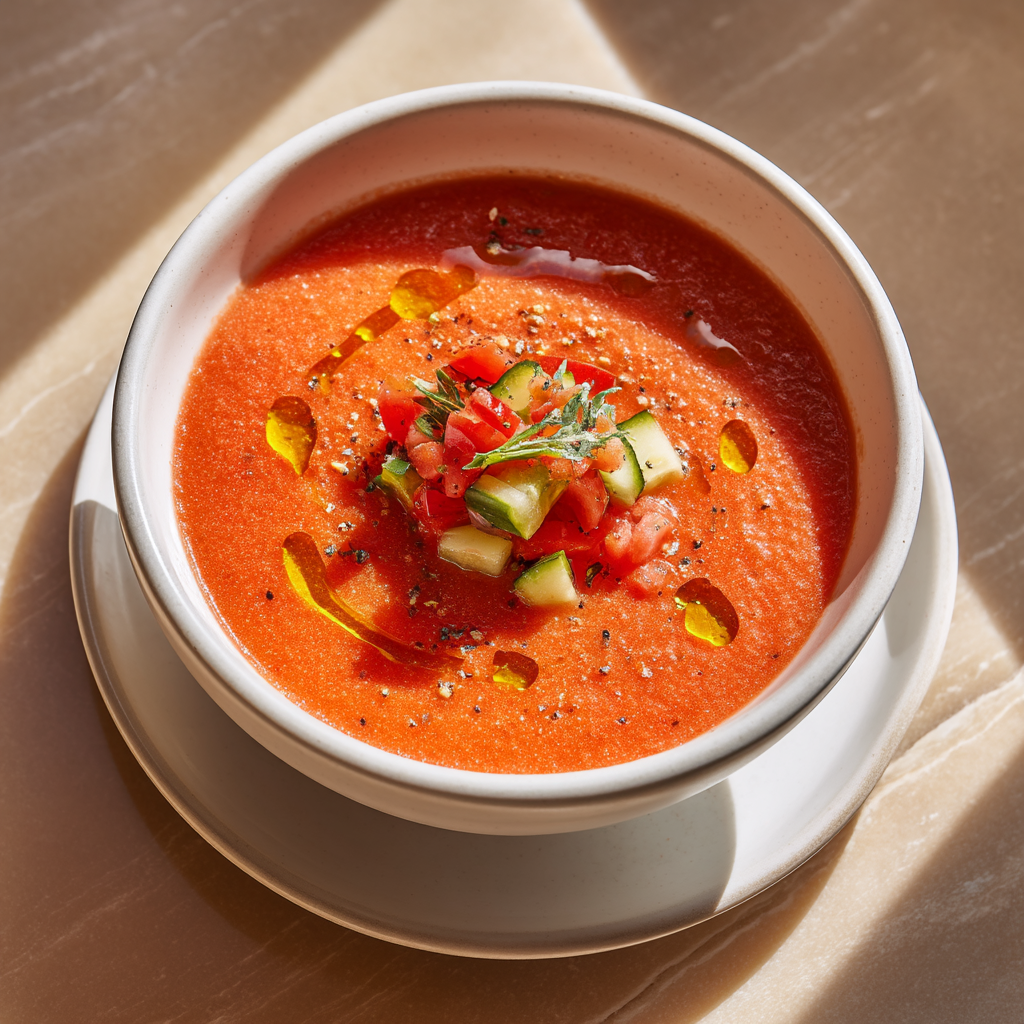
In a small bowl, whisk together 1/2 cup red wine vinegar, 1/2 cup olive oil, and 1 1/2 cups of V8 vegetable juice—this liquid mixture will help everything blend while adding depth of flavor. Now comes the fun part: pureeing in batches. You’ll want to work in small portions, adding some of the tomato juice mixture as needed, but don’t go overboard with the blender. The perfect gazpacho maintains some texture; we’re not making baby food here. The mixture should remain somewhat chunky and crunchy, offering a bit of resistance when you spoon it up. Finally, stir in 1/4 teaspoon cayenne pepper for a hint of heat, 1/2 cup chopped fresh dill for brightness, and season with salt and freshly ground pepper to taste. Cover your creation and let it chill for at least 4 hours—though overnight is even better. The waiting is the hardest part, but those flavors need time to get acquainted with each other.
Fresh Gazpacho Substitutions and Variations
While the classic Mediterranean gazpacho recipe is delicious as written, don’t feel like you’re locked into these exact ingredients. I’m a firm believer in making recipes your own.
Can’t find yellow peppers? Use orange ones instead. Not a fan of dill? Try fresh basil or cilantro for a different flavor profile. You can swap the V8 for plain tomato juice or even watermelon juice for a sweeter twist. For extra heat, add more cayenne or try a jalapeño.
Dietary restrictions? No problem. Make it vegan by ensuring your V8 is vegan-friendly, or add a splash of vodka for an adult version.
What to Serve with Fresh Gazpacho
Now that you’ve got your perfectly chilled gazpacho, let’s talk about what to pair with this vibrant summer soup.
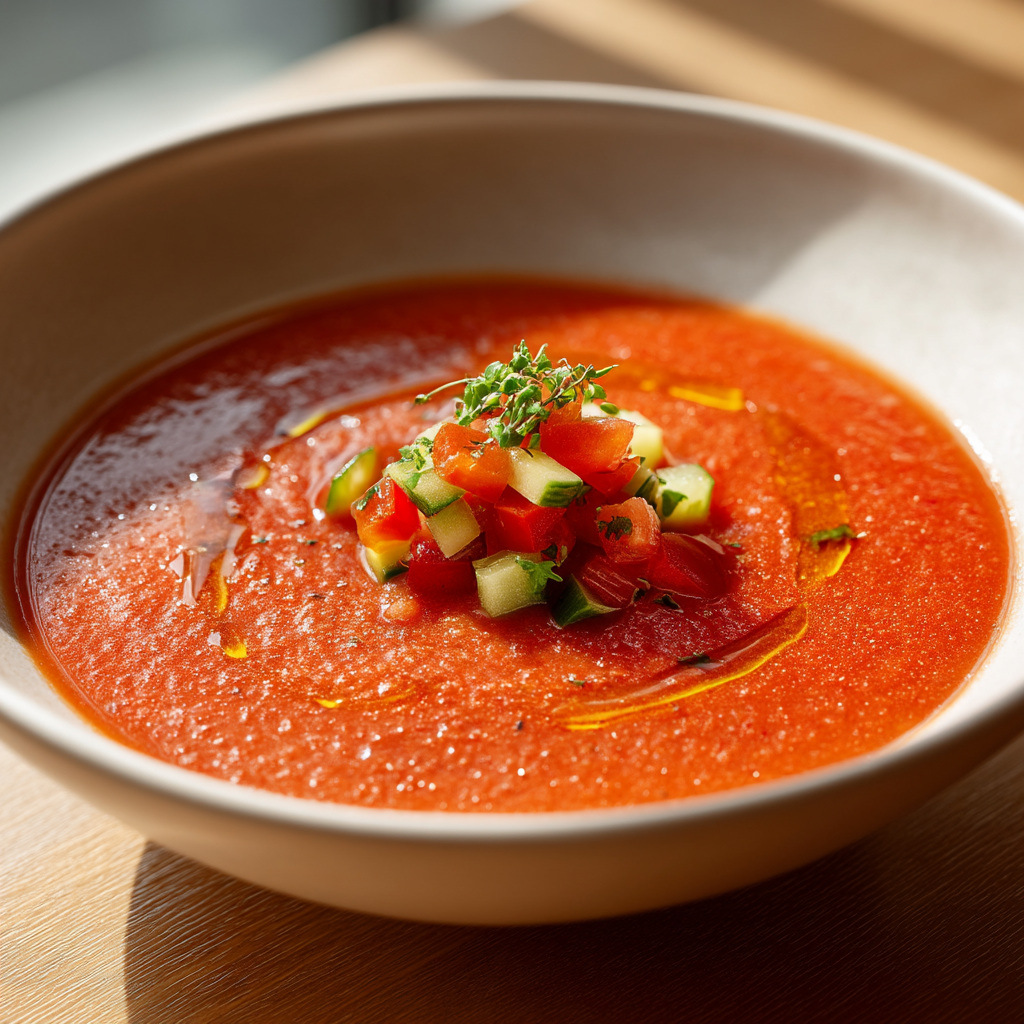
I love serving crusty artisan bread on the side—something with a chewy interior and crisp crust that can soak up those flavorful juices. A classic Spanish pan con tomate works beautifully here.
For a more substantial meal, consider adding grilled shrimp skewers or a simple Spanish tortilla. A light salad with arugula and shaved manchego cheese complements without overwhelming.
And don’t forget a crisp, dry white wine like Albariño or Verdejo. Their bright acidity mirrors gazpacho’s tangy notes perfectly.
Final Thoughts
Gazpacho has truly earned its place as one of summer’s most invigorating culinary delights. I’m always amazed at how something so simple—just fresh vegetables blended together with minimal cooking—can deliver such profound flavor. The Mediterranean version we’ve explored today offers that perfect balance of acidity, freshness, and subtle heat.
What I love most about gazpacho is its versatility. Make it ahead, store it in the fridge, and it’s ready whenever hunger strikes. During those sweltering days when cooking feels impossible, this vibrant soup becomes your culinary savior. Revitalizing, nutritious, and absolutely gorgeous in the bowl.
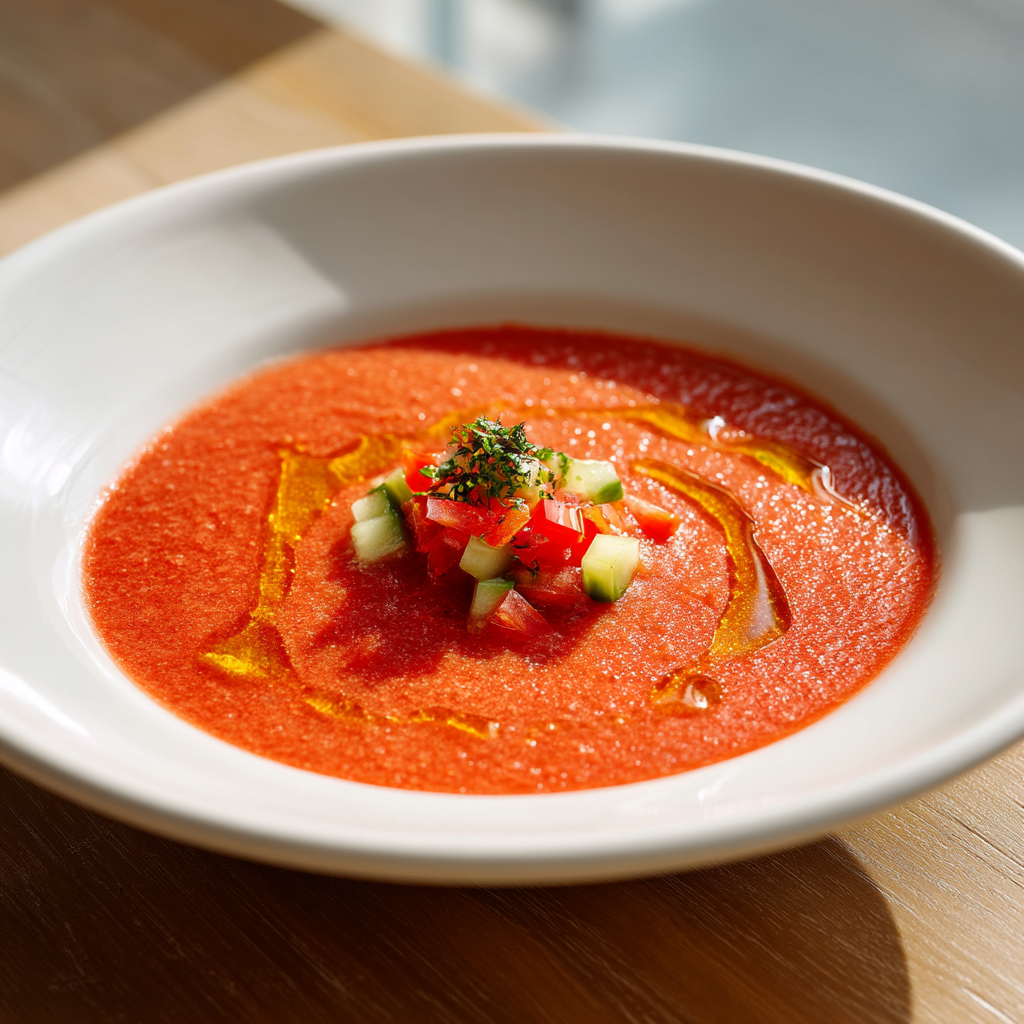
Easy Mediterranean Fresh Dill Gazpacho
Ingredients
Equipment
Method
- Wash and coarsely chop the tomatoes, reserving the juice. Core, seed, and chop the red and yellow peppers. Peel, seed, and chop the cucumbers. Dice the celery and prepare the red onions and shallots.
- In a small bowl, whisk together the red wine vinegar, olive oil, and V8 vegetable juice.
- Puree the chopped vegetables in batches, adding some of the vinegar mixture as needed, until the desired chunky texture is achieved.
- Stir in the cayenne pepper and chopped fresh dill. Season with salt and pepper to taste.
- Cover and chill the gazpacho for at least 4 hours before serving.